Trenchless pipe lining is one of two main methods for repairing a failing sewer line without digging up your yard. If you have heard the term “CIPP” or “pipe rehabilitation,” they all refer to the same process: installing a new pipe inside the old one, accessed through an existing cleanout rather than a trench.
Here is how it works, when it makes sense, and when it does not.
What CIPP pipe lining is
CIPP stands for cured-in-place pipe. The short version: a flexible liner saturated with epoxy resin gets inverted into your existing sewer line through the cleanout at your home. Once it is in position, a blue-light curing system travels through the liner and hardens the epoxy against the inside wall of the pipe. What you end up with is a smooth, jointless new pipe formed inside the original one.
The pipe-within-a-pipe approach is why no trench is needed. The liner goes in through the cleanout, not through a hole in the ground. It is the method behind our sewer pipe lining service.
It is a pipe, not a coating
This is the part most people have backwards, and it is worth stating plainly.
When we think about lining something, we tend to picture something flexible, almost like a fabric, or a coating like paint. In reality, cured in place pipe lining could not be further from that. Done properly, these are completely solid pipes, like installing a brand new pipe inside your existing one.
The liner is flexible on the way in, which is the whole point: it has to travel through the cleanout and around bends to reach the damage. Once it cures, it is rigid. What you are left with is structural pipe rather than a surface treatment, and it carries load on its own instead of leaning on the old pipe to hold its shape.
How far cured in place pipe has come
Cured in place pipe has come a long way over the years, and the biggest change is in how the resin sets.
The older approach circulated steam or hot water through the liner and waited for the epoxy to set. It worked, but it was sensitive to conditions. On a hot day the resin could begin curing before the liner had fully expanded against the pipe wall. On a cold day it could need heat held in the line for a full day or longer, and the homeowner could not use the sewer for that entire stretch.
We cure with blue light instead. A light head travels the length of the liner on a rod, hardening the resin as the head is drawn back at a speed calculated from the pipe diameter, the temperature, and even whether any bulbs in the head have burnt out. It carries a camera, so we can confirm the liner is sitting correctly before anything is cured. That leaves fewer variables, and the weather is not one of them. The result is a pipe just as durable and solid as a conventionally installed one.
Light curing has become the go-to method, and in a climate like Minnesota’s that matters more than it does elsewhere. Older methods such as steam required far more consistent and fair weather. The blue light process can be done all winter, where other methods usually will not be lining in the cold months. Contractors running steam or hot water systems in this region often stop lining for part of the winter because their cure depends on ambient heat. Ours does not. For how we scope a job at a specific address, see our CIPP lining service page.
The full process from start to finish
The process has four stages:
Camera inspection. Before anything else, we push an HD camera through the full length of the line from the cleanout to the city connection. The camera shows us the pipe condition, what kind of material it is, where roots have entered, and whether the pipe has any structural issues that would make it a poor lining candidate. We show you the footage.
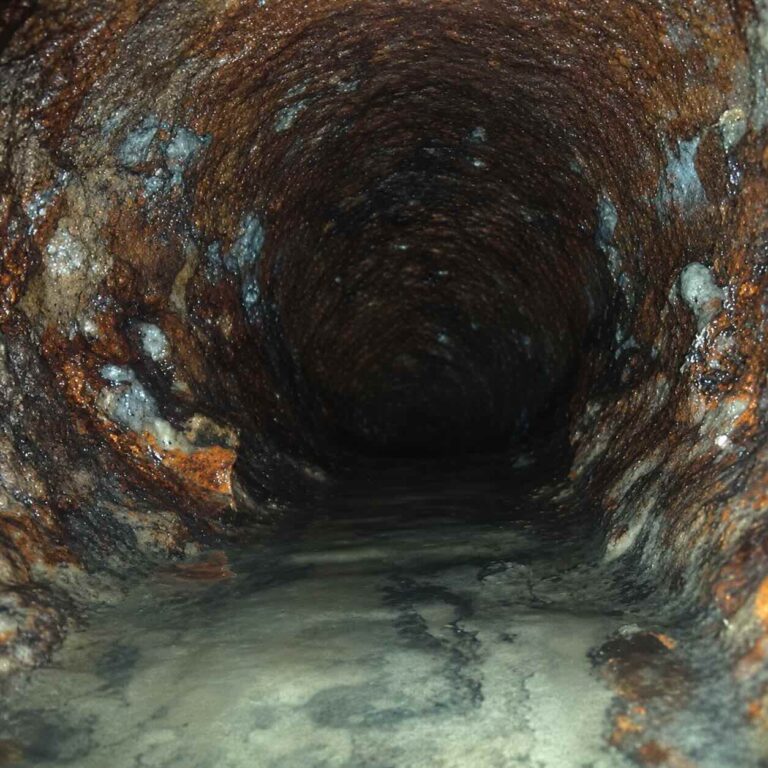
Cleaning. A liner cannot bond to a dirty or root-filled pipe. We use high-pressure jetting to clean the line completely. If there are significant root intrusions or collapsed sections, those get addressed before the liner goes in.
Liner installation and curing. A custom liner is measured and cut to the length of the line segment being repaired. It gets saturated with epoxy, loaded into the inversion unit, and pushed into the pipe by air pressure. Once it is fully positioned against the pipe wall, the blue-light curing unit hardens the epoxy. Cure time is roughly one to two hours depending on pipe diameter and liner thickness.
Final camera inspection and reinstatement. After curing, a robotic cutter reopens any branch connections (floor drain laterals, etc.) that the liner sealed over. A final camera confirms the liner is seated correctly and the line is clear.
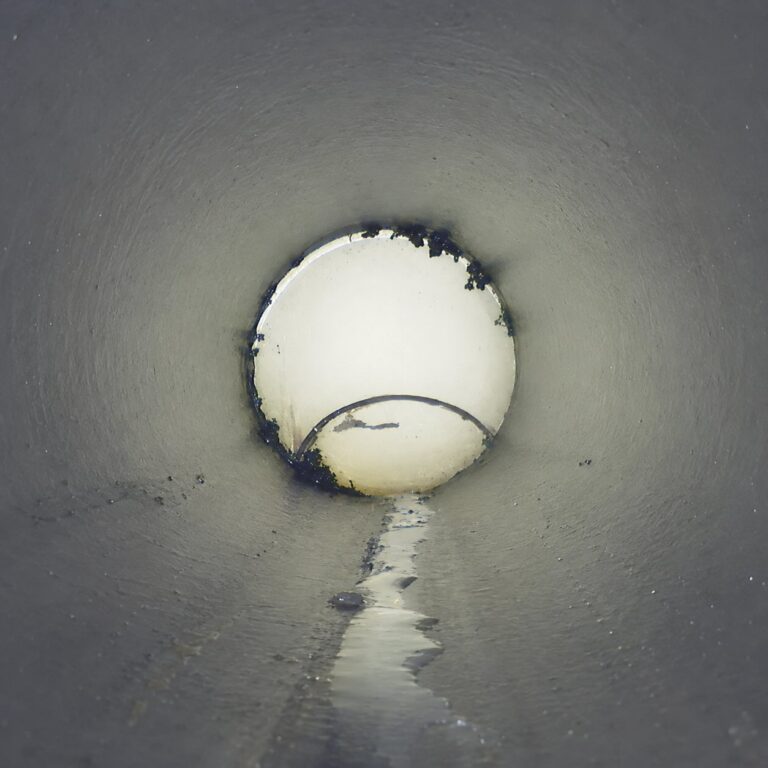
Most residential lining jobs in Duluth and Superior are done in a single day.
When pipe lining is the right solution
Pipe lining is often the least invasive and most affordable way to protect your pipe from whatever is causing the problem. If it is root intrusion or a leak, we can probably line it. However, if the entire pipe has collapsed, or the damage is severe enough that the pipe needs to be redone, lining cannot effectively get through there. At that point we would need to move to pipe bursting, where we drag a brand new pipe through and completely tear open the existing one.
CIPP lining works well on pipes that are cracked, have joint separation, have root intrusion, or are corroding from the inside, but still have their basic structural shape. The liner follows the inside of the existing pipe, so the pipe needs to be intact enough to hold the liner in place while it cures.
In Duluth and Superior, the most common candidates are:
- Clay tile lines (common in homes built before 1960): These develop joint gaps over time as the soil shifts. Roots follow moisture straight into those joints. Lining seals the joints completely and eliminates root entry points.
- Cast iron lines (common in homes from the 1940s through 1970s): Cast iron corrodes from the inside. Hydrogen sulfide from sewage reacts with the iron and breaks down the pipe wall over decades. A liner stops the corrosion process and restores full flow capacity.
- PVC lines with isolated damage: A cracked joint or a section with root intrusion can be lined as a point repair rather than a full-line installation.
When pipe lining is not the right solution
Lining does not work on every pipe. The main situations where we would recommend a different approach:
Collapsed or severely offset pipe. If the pipe has lost its shape, the liner cannot form correctly. A pipe that has fully collapsed or has major sections that have settled out of alignment needs pipe bursting or excavation, not lining.
Orangeburg pipe. Orangeburg is a compressed paper-and-pitch product used in some homes from the 1950s and 1960s. It deteriorates over time into a soft, deformed shape that cannot support a liner. Orangeburg nearly always requires pipe bursting or full replacement.
Pipe that has severely reduced diameter. If the line has narrowed significantly from buildup or pipe deflection, lining reduces the inside diameter further. We check this during the camera inspection and flag it if it is a concern.
Pipe lining vs. pipe bursting
Both are trenchless methods. The main difference is what happens to the old pipe. Lining creates a new pipe inside the old one. Pipe bursting fractures the old pipe outward as new HDPE pipe is pulled through. Bursting is the right choice when the old pipe cannot support a liner, when you want a full-diameter replacement rather than a slightly reduced inside diameter, or when the line has collapsed.
Lining costs less than bursting in most cases and is faster. Bursting is sometimes the only viable option. The camera inspection is what determines which one makes sense for your specific pipe.
Cost range in Duluth and Superior
Pipe lining for a residential sewer lateral in the Duluth and Superior area typically runs $5,000 to $15,000 depending on pipe length, diameter, and condition. That is for a full line. Point repair on an isolated section starts lower.
Traditional excavation for full sewer replacement typically runs $15,000 to $30,000 once you factor in the pipe work plus restoration of whatever was in the trench path. Concrete driveways, mature landscaping, and rock-heavy soil drive that number up quickly in this area.
The camera inspection is free. We run the camera, show you what we find, and give you honest options before any repair decision is made.
The “pipe rehabilitation” framing
You will sometimes see trenchless pipe lining described as “pipe rehabilitation.” It is the same thing. Rehabilitation is the term more commonly used in municipal and commercial work, where large-diameter pipes under streets and parking lots get lined using the same CIPP process. The residential version uses smaller-diameter equipment but the same chemistry and the same installation method.
If you have seen a municipality relining sewer mains in your neighborhood, the liner inside your house lateral works on the same principle.
Common questions
When does pipe lining not work?
The clearest case is Orangeburg. It is a pipe made of compressed wood pulp bound with pitch, used in a lot of homes built in the 1950s and 1960s, and it does not fail the way clay or cast iron does. Instead of cracking while holding its round shape, it softens and deforms. It goes oval, it blisters inward, and it loses the structural shape a liner needs to cure against.
That is the problem. A liner takes the shape of whatever it cures inside. Line a deformed Orangeburg pipe and you get a deformed liner, cured into a shape that was already failing. Orangeburg nearly always needs pipe bursting or full replacement instead, and the camera inspection is how we identify it before anyone commits to a method.
Lining is also the wrong call on a pipe that has fully collapsed, on sections that have settled badly out of alignment, and on lines whose inside diameter has already been reduced enough that losing a little more would restrict flow.
Can pipe lining be done in the winter?
With blue light curing, yes, straight through the winter. The cure comes from the light head rather than from heat circulated through the line, so ambient temperature is not what determines whether the resin sets.
This is a real difference in the Twin Ports. If your line fails in January, the curing method your contractor uses decides whether you wait until spring.
Is a lined pipe as strong as a new pipe?
Yes, when it is installed properly. A cured liner is structural pipe in its own right, not a coating held up by the host pipe. It also has one advantage a new pipe does not: it is continuous, with no glued joints along the run, and joints are where most sewer lines give out.
How long does a liner last?
We warranty our lining work for 10 years, and the liner product itself is tested to a 50 year service life. The comparison we use is a 50 year roof: the material is rated for that span under normal conditions, and deliberate abuse is a separate matter. Running cutting chains down a lined pipe can damage it the same way it would damage anything else.
Starting point: the camera inspection
The only way to know if your pipe is a lining candidate is a camera inspection. We look at the pipe material, the condition of the joints, root intrusion, pipe shape, and any areas of collapse or significant deflection. From that we can tell you whether lining makes sense, whether bursting is the better option, or whether the pipe is in good enough shape that repair is not needed yet.
Camera inspections are free in Duluth, Superior, Hermantown, Proctor, Cloquet, Two Harbors, and the surrounding area. Schedule one here.