If you own an excavator or know somebody who does, repairing your own sewer line looks like an obvious way to save several thousand dollars. It is a fair question, and the answer is more interesting than a flat no.
Part of the line you genuinely can work on. Part of it you cannot touch at all. And there is a rule about partial repairs that catches people out after the work is already done.
Where Your Property Ends
Most homeowners assume the lawn out to the street is theirs. Legally, it usually is not.
The public right of way is what the city owns. The layout is typically the road, then the boulevard, then the sidewalk, and generally everything on the street side of the sidewalk is city owned. No homeowner can get into that area. They cannot touch it, regardless of who mows it.
That matters because the connection between your lateral and the city main sits inside that strip. If the defect on your line is out near the main, that is not a job you can do yourself at any skill level. It is not a question of competence, it is a question of who is permitted to open the ground.
Technically a homeowner could do a repair on the section between the right of way and the house. Even then it needs permitting, and then the partial repair rule comes into play.
The Partial Repair Rule Nobody Mentions
This is the one that costs people money.
The way the statutes work in Duluth, if your line is compromised in one area, you have to ensure the rest of the line is in good condition. Fix a short bad section and leave other defective areas in the line, and you can end up with a letter giving you a limited window, roughly 90 days, to repair the rest before penalties start.
So the saving on the section you handled yourself can turn into a deadline on the sections you did not. A camera inspection up front is what prevents that, because it shows the condition of the entire run rather than the one spot that happened to back up. Specific timelines and requirements are set by the city and can change, so confirm the current rules with your municipality before you plan around them.
Excavation Bonds
Bonding is critical in all of these cities, and it is the practical reason this work goes to contractors.
An excavation bond works like insurance carried by the contractor. If something underground gets hit during the work, the city can come back and charge for the repair, and if that is not paid, the bond covers it. Anybody working in the right of way carries one.
A homeowner with a rented machine has none of that. If a gas line, a water main, or a fiber run gets caught, the cost lands directly on the person who was holding the controls. There are contractors who get a little rammy with a machine and end up hitting gas lines and causing havoc, and even they are carrying a bond when it happens. You would not be.
We are licensed and bonded to work in these cities and to excavate within the right of way, and that coverage is part of what you are buying.
What You Are Up Against Underground Here
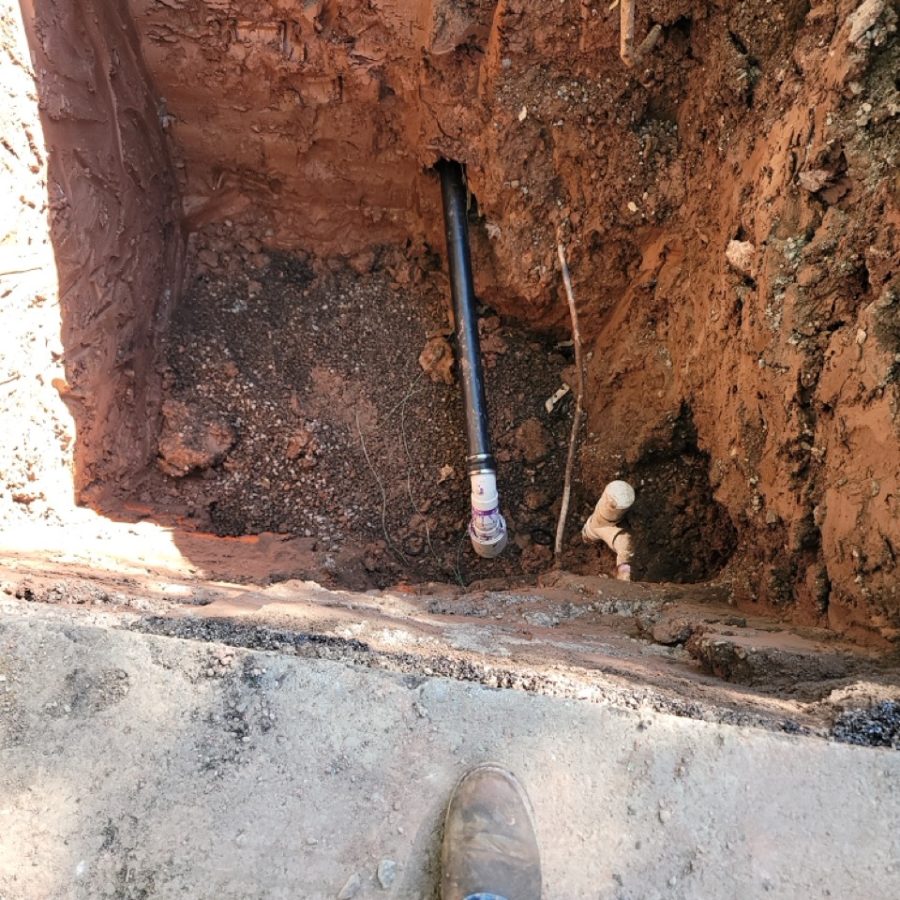
Regional conditions make this harder than a generic how-to video suggests.
Depth. Sewer lines in this climate sit well below frost, considerably deeper than homeowners expect. See how deep sewer lines are buried in Duluth.
Ledge rock. Bedrock sits close to the surface through much of the Duluth hillside. A rented mini excavator does not deal with ledge rock.
Trench safety. A trench deep enough to reach a sewer lateral is deep enough to be dangerous. Walls collapse without warning, and this is where serious injuries in this trade happen.
Grade. A sewer lateral has to fall consistently toward the main. Reinstall a section slightly off and you have built a sag that holds water and catches solids for the rest of its life. A liner will not correct it later, because a liner follows the shape of the host pipe.
Restoration. Opening a trench is the easy half. Backfilling in proper lifts so the ground does not settle, and then restoring driveway, walk, and landscaping, is most of the work and most of the cost.
What You Can Do Yourself
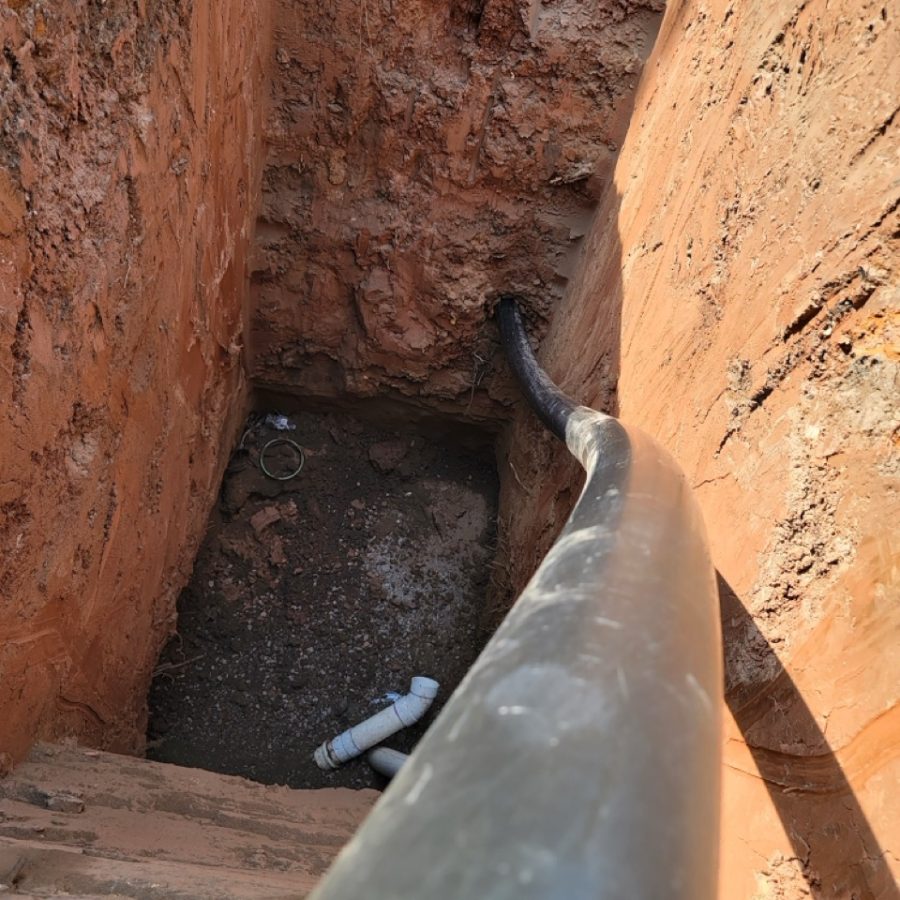
None of this means there is nothing for a capable homeowner to handle:
- Clearing a soft blockage with a rented drain machine, when the line itself is sound
- Digging to expose a cleanout on your own property so a camera can get in
- Yard work and landscaping well clear of the line and the right of way
- Getting the line scoped so you know exactly what you are dealing with before deciding anything
Before any digging at all, call 811 for utility locates. That applies to a fence post as much as a sewer trench, and it is free.
Northern Wisconsin: Ashland and Superior
The right of way principle holds across the region, though the specific ordinances, permit process, and bonding requirements differ by municipality. Ashland, Superior, and Douglas County each set their own, and the details are worth confirming locally rather than assuming Duluth rules apply across the bridge.
What does not change is the underlying situation: the connection to the main sits in public ground, the work there requires a bonded contractor, and a camera inspection beforehand is what keeps a partial repair from becoming a bigger obligation later.
- Trenchless sewer repair in Ashland, WI
- Trenchless sewer repair in Superior, WI
- What trenchless sewer repair costs in northern Wisconsin
The Cheapest Thing You Can Do First
Whatever you decide, scope the line before you commit to anything, including doing it yourself. It is the one step that tells you whether you are facing one bad joint or a line that is finished, and it is the difference between a targeted repair and a deadline letter from the city.
The inspection, the locate, and the written report are free, with no obligation. You keep the footage and you are welcome to take it to another contractor for a quote.
Call 218-409-6356 or request a free camera inspection. If the line turns out to be repairable without digging, see pipe lining and point repair.
Frequently Asked Questions
Can I legally repair my own sewer line?
On your own property, with the right permits, generally yes. In the public right of way, which is typically everything past the sidewalk toward the street, no. That ground is city owned and homeowners cannot work in it. The connection to the city main sits in that strip.
Where does the public right of way start?
Typically you have the road, then the boulevard, then the sidewalk, and generally everything on the street side of the sidewalk is city owned. You may mow and shovel it, but you cannot excavate it. Confirm the boundary for your address with your city.
What happens if I only fix part of my sewer line?
In Duluth, if the line is compromised in one area you are expected to ensure the rest is sound. Repair one section while other defects remain and the city can issue a window, roughly 90 days, to correct the remainder before penalties. A full camera inspection beforehand is what avoids the surprise.
What is an excavation bond?
Insurance a contractor carries to work in city right of way. If something underground is damaged, the city can charge for the repair, and the bond covers it if it is not paid. Homeowners doing their own digging have no such protection.
Do I need to call 811 before digging on my own property?
Yes. Utility locates are free and apply to any digging, including fence posts and planting. Call before any work starts.
Is it cheaper to repair a sewer line myself?
Rarely, once the full picture is counted. You cannot do the right of way portion at all, you carry every risk of hitting a utility, and a partial repair can trigger an obligation to fix the rest. Trenchless work also avoids most of the restoration cost that makes open cut expensive in the first place.