Both lining and bursting fix a failing sewer line without trenching your yard. The difference is simple: lining rebuilds the pipe you already have. Bursting replaces it with a new one. Which is right depends almost entirely on whether your existing pipe is still structurally sound enough to hold a liner.
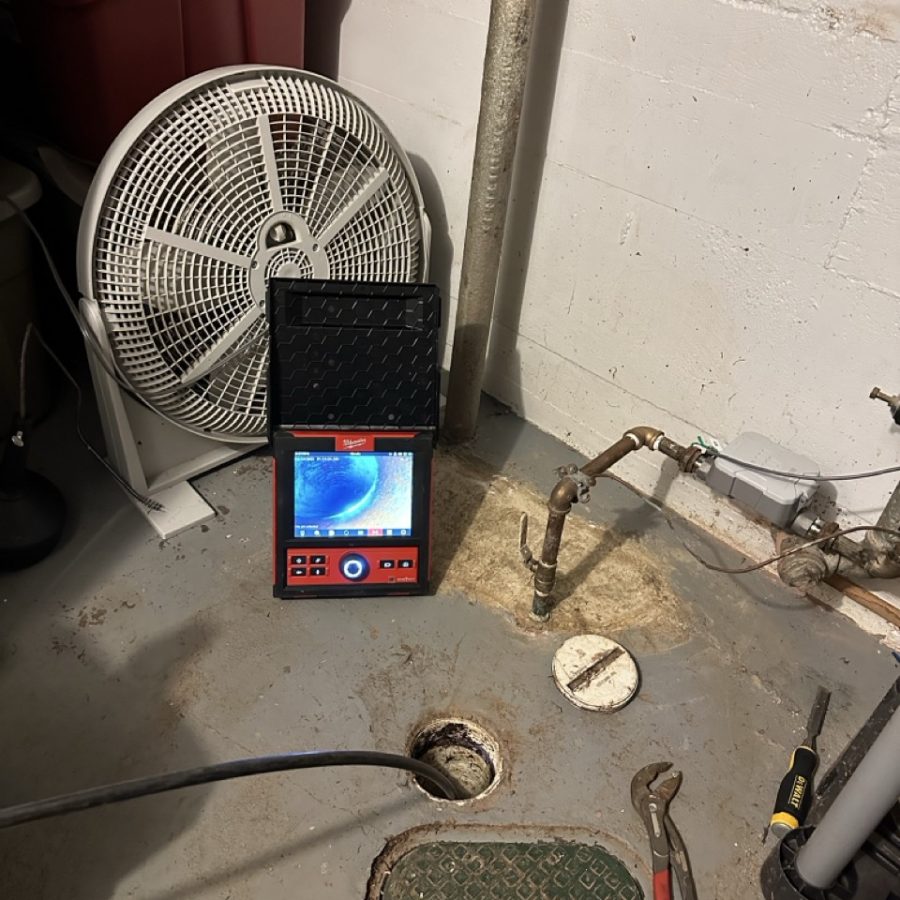
That is not a judgment call we make from the driveway. It comes off the camera footage. Here is how each method works, what each costs, and the specific conditions that push a job one way or the other.
The Short Answer
| CIPP Lining | Pipe Bursting | |
|---|---|---|
| What you end up with | New liner inside the old pipe | Entirely new HDPE pipe |
| Requires | Pipe holds its shape | A path to pull through |
| Diameter after | Slightly reduced | Same or larger |
| Excavation | Access at each end | Pit at the main, access at the foundation |
| Typical time | One day | One to two days |
| Cost | $5,000 to $15,000+ | $12,000 to $20,000+ |
When Lining Is the Right Call
Lining works when the pipe has multiple defects but is still structurally suitable for rehabilitation. In practice that means the pipe still holds its round shape, even if it is cracked, root filled, or has separated joints.
The process starts with a camera inspection and then extensive cleaning. Specialized equipment removes roots, buildup, burrs, and debris. A liner will not bond correctly to a dirty pipe, so this step decides whether the job succeeds. It is also the step that gets rushed by contractors competing on price.
Once clean, a liner is measured, cut, and saturated with epoxy resin, then installed through an inversion process that presses it tightly against the existing pipe walls. A calibration tube ensures it conforms to the exact shape and diameter of the host pipe. When it cures you have a continuous, jointless pipe inside the old one.
Lining is usually right when the camera shows:
- Clay tile or cast iron with cracks and root intrusion, still holding its shape
- Separated or offset joints along an otherwise sound run
- Interior corrosion or scaling without structural loss
- A line under a driveway, patio, or mature landscaping where access is limited
When Bursting Is the Right Call
Bursting is used when a line is collapsed, severely deteriorated, or otherwise unsuitable for lining.
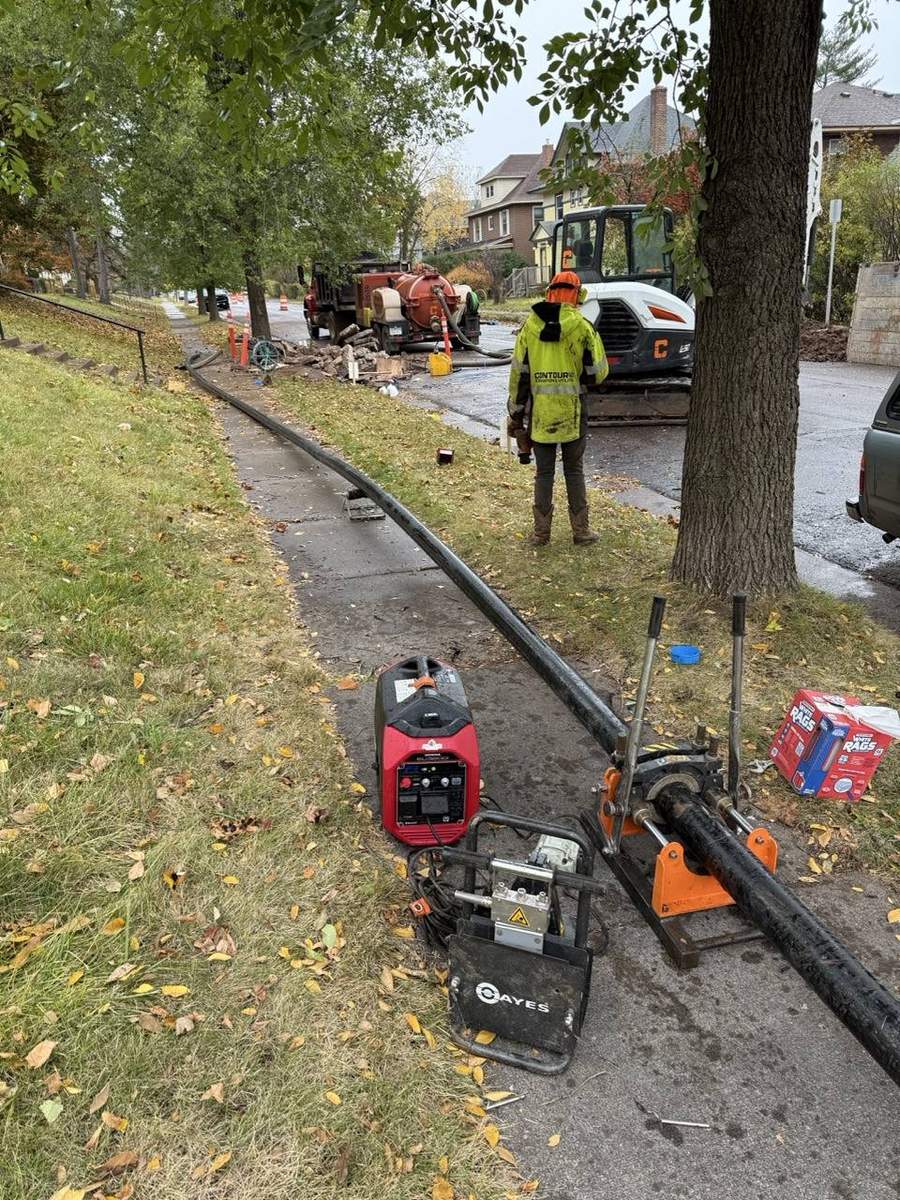
We locate the sewer connection at the city main and excavate an access point there, then create access inside the home where the sewer exits the foundation. A hydraulic bursting unit is set up and a cable is run through the existing pipe.
A bursting head is attached to the cable, along with new HDPE pipe that has been fusion welded into one continuous length. As the unit pulls the assembly through, the head fractures the old pipe outward into the surrounding soil while the new line is drawn into place behind it. The new pipe is connected at the house and the main, the area is backfilled and restored, a new cleanout goes in, and a final camera pass confirms the work.
Bursting is usually right when the camera shows:
- A collapsed section, or a line at risk of collapse
- Orangeburg that has deformed out of round
- Cast iron with advanced corrosion and material loss
- A diameter change partway along the run
- Enough deterioration that a liner would have nothing solid to bond to
Four Situations Where the Answer Surprises People
Your line changes diameter partway
Six inch to four inch and back to six is common in older homes that have been added onto. We can physically line through a size change, but the liner follows the existing pipe, so a restriction stays a restriction. We also cannot stand behind that narrow section the way we stand behind a full size line.
Bursting gives you one consistent diameter end to end. On these jobs we will usually recommend it even though it costs more, because it is the fix that holds.
The line has a belly
A belly is a low spot where the pipe has lost its grade and holds standing water. Lining does not fix it. The liner conforms to whatever shape it finds, so a bellied pipe becomes a bellied liner. Bursting can sometimes correct grade, and sometimes a targeted dig at the low spot is the honest answer.
You have Orangeburg
Orangeburg is layered paper pulp and coal tar, installed roughly 1945 through the early 1970s. It absorbs groundwater and deforms from round to oval to flat. If it still holds its shape, lining can stabilize it. Once deformation starts, bursting is the practical path.
Homes built between 1945 and 1965 in this area have the highest likelihood of it. More on what is buried under Northland homes.
Only one section is bad
If the camera shows a single defect on an otherwise sound line, neither method is the answer. A point repair seals just that section for around $3,500, and you are not paying to treat the whole run.
What About Cost
Lining runs $5,000 to $15,000 and up. Bursting runs $12,000 to $20,000 and up. Both vary with length, depth, access, and what has to be restored afterward.
The instinct is to pick the cheaper one. That is the right instinct only when both are genuinely viable. Lining a pipe that should have been burst produces a liner that follows a failing shape, and you pay again in a few years. When the camera says the pipe can hold a liner, lining is the better value. When it says otherwise, bursting is the cheaper option measured over the life of the pipe.
Both come in well under a full dig and replace once yard, driveway, or patio restoration is counted.
What Both Methods Have in Common
- No full-length trench. Access points instead of an open cut across the yard.
- A jointless result. Roots enter at joints and cracks. Neither a cured liner nor fused HDPE gives them one.
- Decades of service life. A liner is designed for roughly 50 years. New HDPE is comparable or better.
- A final camera pass. We film the finished line before leaving so you can see the result.
Common Questions
Which is better, lining or bursting?
Neither is better in general. Lining is better when the existing pipe still holds its shape, because it costs less and disturbs less. Bursting is better when the pipe is collapsed, deformed, or changes diameter, because a liner would preserve the problem. The camera inspection determines which applies to your line.
Does lining reduce the pipe diameter?
Slightly. You give up a small amount of diameter to the liner wall. In practice flow usually improves, because you are trading a rough, cracked, root filled surface for a smooth continuous one.
Can pipe bursting increase my pipe size?
Often yes. Because the bursting head fractures the old pipe outward, the new line can be the same size or larger. That is one reason it is the answer for lines with a diameter restriction.
How much digging does each method need?
Lining needs access at each end of the section being lined. Bursting needs a pit at the city main connection and access where the line exits the foundation. Both are far less than a full trench, but neither is zero excavation, and anyone telling you otherwise is overselling.
How do I know which one my line needs?
A camera inspection, which we include free. We run the camera, you watch the screen with us, and then we walk through the options with what each costs.
Finding Out Which One You Need
Every line is different, and the honest answer is that we do not know which method yours needs until we look. What we can tell you is that the footage decides it, you will see the same footage we do, and we will tell you when the cheaper option is the wrong one.
Contact us or call 218-409-6356.