A house trap is a U-shaped section of pipe on your main sewer line, usually buried in the basement floor near where the line leaves the house. It was standard in homes built through the mid-twentieth century, and if your Duluth or Superior home predates about 1970 there is a good chance yours is still down there.
It served a real purpose once. Today it causes more problems than it solves, the City of Duluth will help pay to remove it, and it is often the reason a sewer line cannot be properly inspected.
What It Was For
A house trap holds a plug of standing water, the same way the trap under your kitchen sink does. That water sealed the line and blocked sewer gas from coming back up into the house.
That was necessary when individual fixtures did not have their own traps. Modern plumbing puts a trap at every fixture, so the house trap is doing a job that is already handled several times over.
Why It Is a Problem Now
It stops a camera
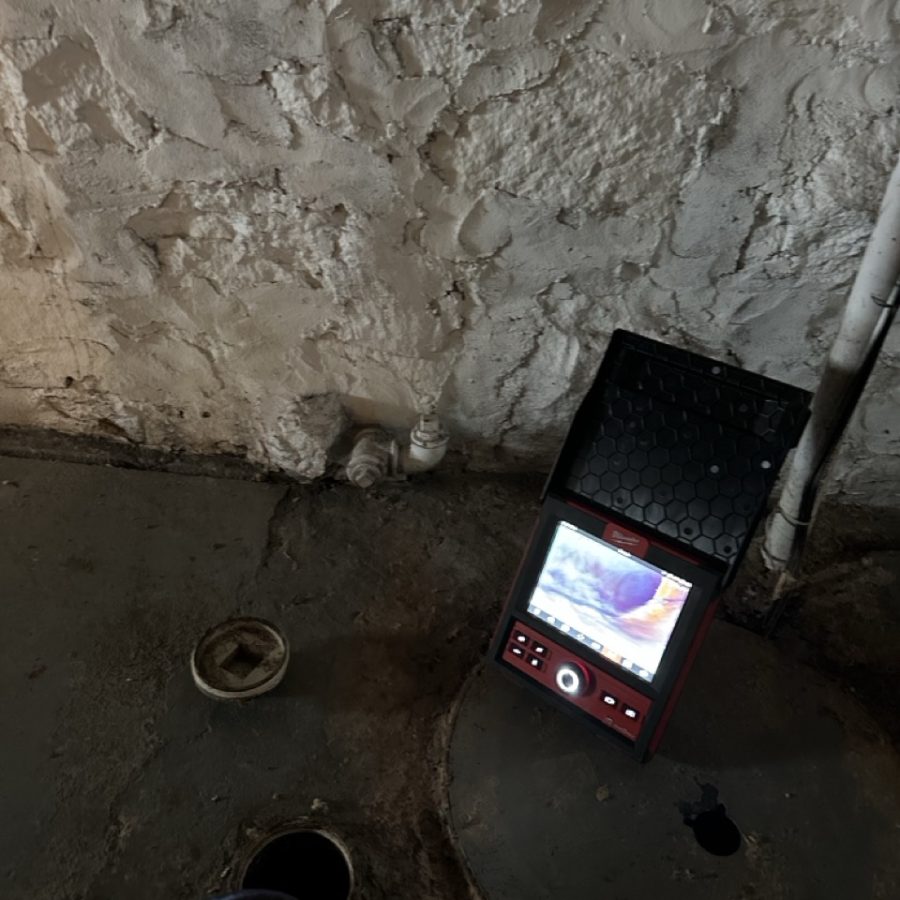
This is the one we run into most. A sewer camera cannot navigate the tight double bend of a house trap. If you have one, we can inspect up to it and no further.
That means the entire run from your basement to the city main, the part most likely to have roots, cracks, or a collapse, cannot be seen. You are making decisions about your sewer line with most of it hidden.
It catches debris
The trap is a low point that holds water by design, so solids, grease, and paper collect in it. Many homes with recurring backups have a trap doing exactly what it was built to do, plus a century of buildup.
It blocks cleaning and lining
Jetting equipment has the same problem the camera does. And a CIPP liner cannot be installed through a house trap, so if lining is the right fix for your line, the trap has to come out first regardless.
The city wants it gone
This is where it stops being just a plumbing nuisance and becomes a city program.
Inflow and Infiltration, and Why Duluth Cares
Inflow and infiltration, usually shortened to I&I, is clean water getting into the sanitary sewer where it does not belong. Rain and snowmelt that should reach the ground or the storm sewer instead ends up in the pipe carrying sewage to the treatment plant.
In older Duluth homes this was how it was built. Downspouts, gutters, and foundation drain tile were routed into a pit in the basement, and that pit drained into the sanitary sewer through the house trap.
It worked until the volume did not. In 2012 a major flooding event overwhelmed the system and sent millions of gallons of sewage overflow toward Lake Superior. The EPA required the city to address stormwater entering the sanitary system, and Duluth’s I&I program is the result. It has been running since.
Roughly 55 percent of Duluth’s sewer system is more than 50 years old, so this is ongoing work, and the city designates an inspection area each year.
What the City Will Pay For
Duluth reimburses eligible property owners up to $2,150, broken out like this:
| Covered work | Reimbursement |
|---|---|
| Working sump pump or gravity system, including dedicated outlet | $1,400 |
| Removal of house trap or traps | $350 |
| Tap into existing storm line, catch basin, or I&I stub | $250 |
| Additional electrical work | $150 |
One detail that catches people: labor is only reimbursable when a licensed contractor performs the work. If you remove the trap yourself, the city will not reimburse your labor. That surprises homeowners planning to save money by doing it themselves.
There is also a point of sale component. Work required when a property changes hands is grant eligible, which matters if an inspection at closing turns up a trap or a foundation drain connection. Separately, a supplemental fund through the Duluth HRA provides additional money to income-eligible owners for related costs like electrical upgrades or floor replacement.
Superior runs a parallel program on the Wisconsin side addressing the same underlying problem. We are on the approved contractor list for both cities.
Full detail on both, plus the other 30 or so programs available in this region, is on our grants and financial assistance page.
What Removal Involves
It depends on where the trap sits.
Inside the foundation, which is most cases, the trap is under the basement floor. Removal means breaking concrete, cutting the trap out, connecting the line straight through, and patching the floor. This is usually a plumber’s job, and we work with plumbers in the area on these.
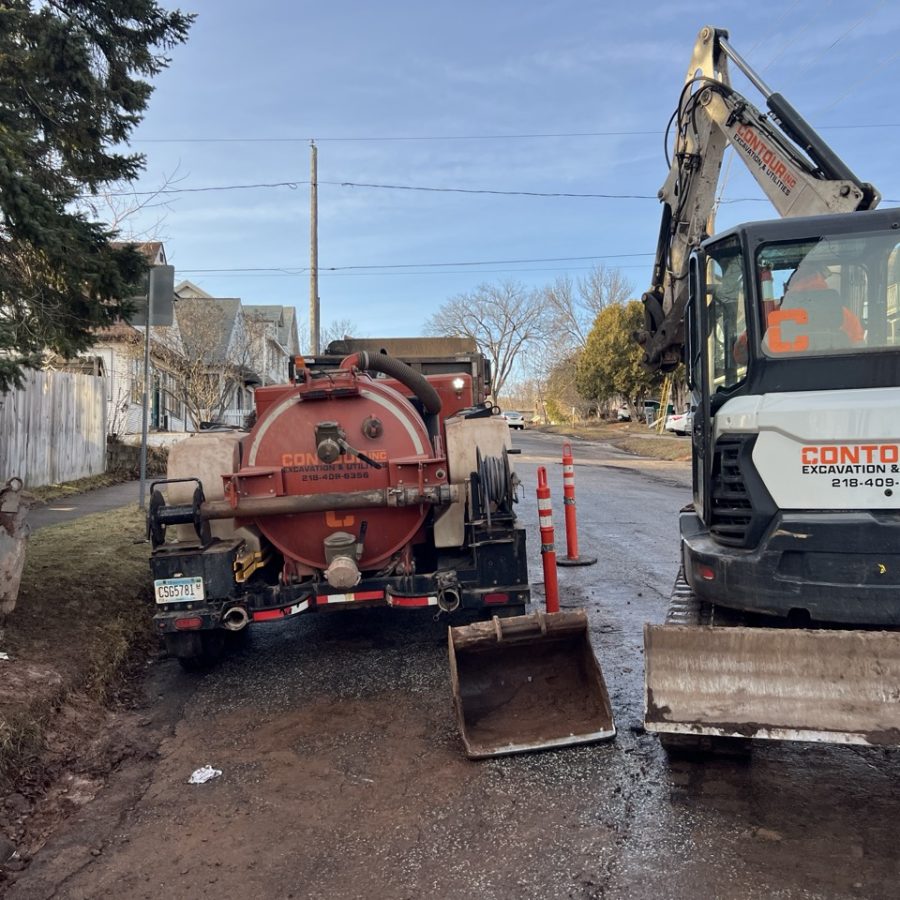
Outside the foundation, we handle it as part of excavation, often at the same time as other sewer work.
Either way, the sequence that saves money is: remove the trap, then camera the full line, then decide what the line needs. Doing it in that order means you find out what you are dealing with before committing to anything larger.
How to Tell If You Have One
Look in the basement floor near where the main line exits toward the street. A house trap usually shows as one or two round cleanout caps set into the concrete, often a few feet apart, sometimes brass and sometimes cast iron. Two caps close together is a strong sign, because that is the trap’s inlet and outlet.
Other indicators:
- The home was built before roughly 1970
- Recurring main line backups that clear and return
- A contractor told you the camera could not get past a certain point
- A floor drain or pit in the basement that stormwater runs into
If you are unsure, we can tell you in a few minutes during a camera inspection, which we include free.
Common Questions
What is a house trap?
A U-shaped section of pipe on the main sewer line, usually in the basement floor, that holds standing water to block sewer gas from entering the home. Modern plumbing traps each fixture individually, so it is no longer needed.
Do I have to remove my house trap?
If your property is identified through Duluth’s inflow and infiltration program, you are required to disconnect foundation drains from the sanitary sewer and, where necessary, remove the house trap and install a sump pump. If the trap’s location or another physical factor outside your control makes removal financially infeasible, the Director of Public Works and Utilities can grant an exception.
Will the city pay to remove my house trap?
Duluth reimburses up to $2,150 total for qualifying I&I work, which includes $350 specifically for house trap removal and $1,400 toward a sump pump or gravity system. Labor is only reimbursable when a licensed contractor does the work.
Why can’t you camera my sewer line?
A house trap is the most common reason. A camera cannot navigate its tight double bend, so everything past it stays unseen. Removing the trap is what makes a full inspection possible.
Can a house trap cause sewer backups?
Yes. It is a low point that holds water by design, so solids and grease collect there. Homes with recurring backups that clear and return within weeks often have a trap that has been accumulating debris for decades.
If You Think You Have One
The useful order is to confirm it, get it out, then look at the whole line. Catching a failing sewer while it can still be cleaned and lined is far cheaper than waiting until it collapses and has to be dug up, and the city will help pay for part of the work either way.
We work throughout Duluth, Superior, Hermantown, Proctor, Cloquet, Two Harbors, and Esko, and we are on the approved contractor list for both city programs.
Contact us or call 218-409-6356.