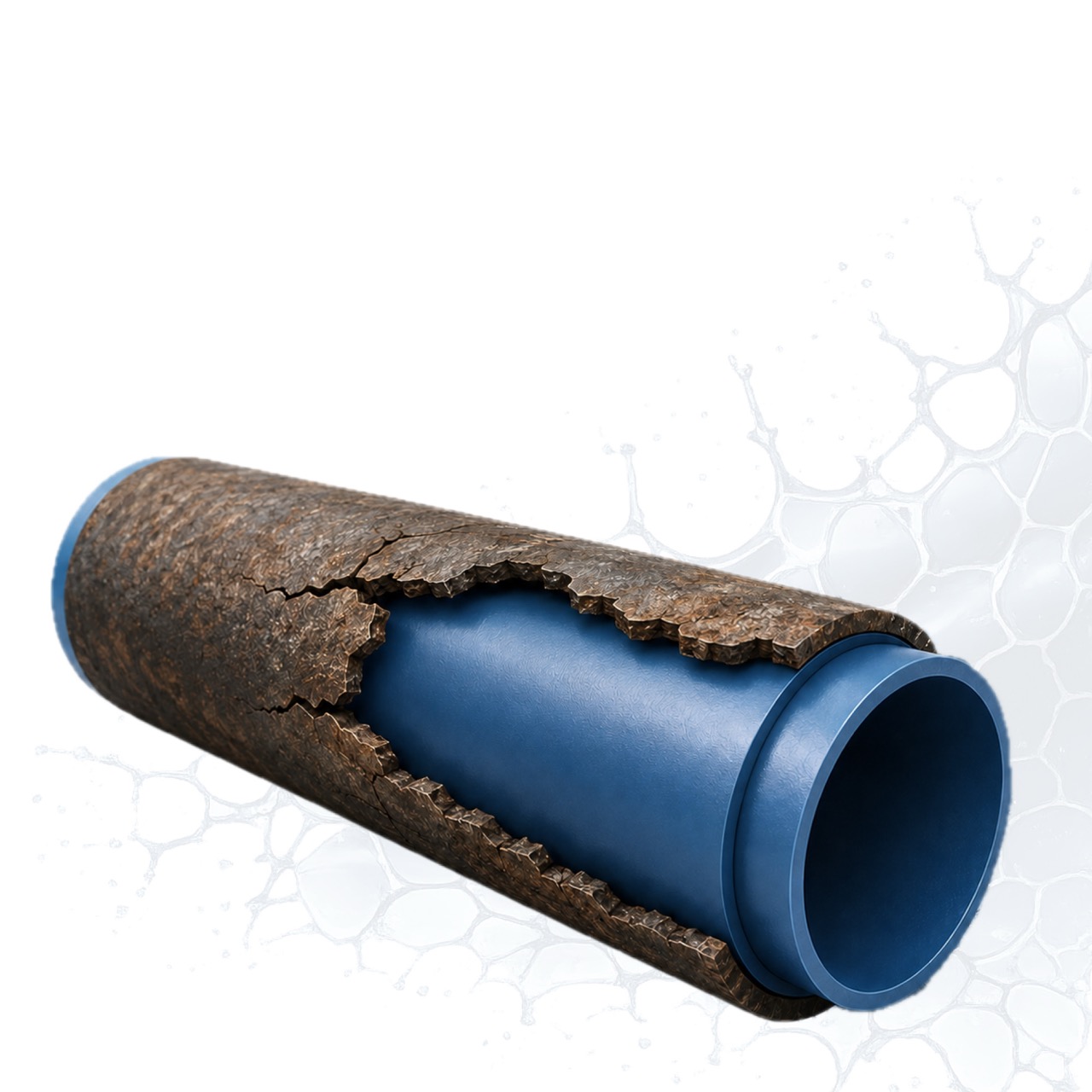
A fiberglass liner is saturated with epoxy, pulled into your existing sewer, and cured hard in place. When it is finished you have a new pipe inside the old one, formed as a single piece from the house all the way to the city main.
No seams matters more than it sounds. Nearly every sewer failure we dig up started at a joint, whether that is a separated clay tile or a glued PVC coupling that was never seated properly. A liner has none.
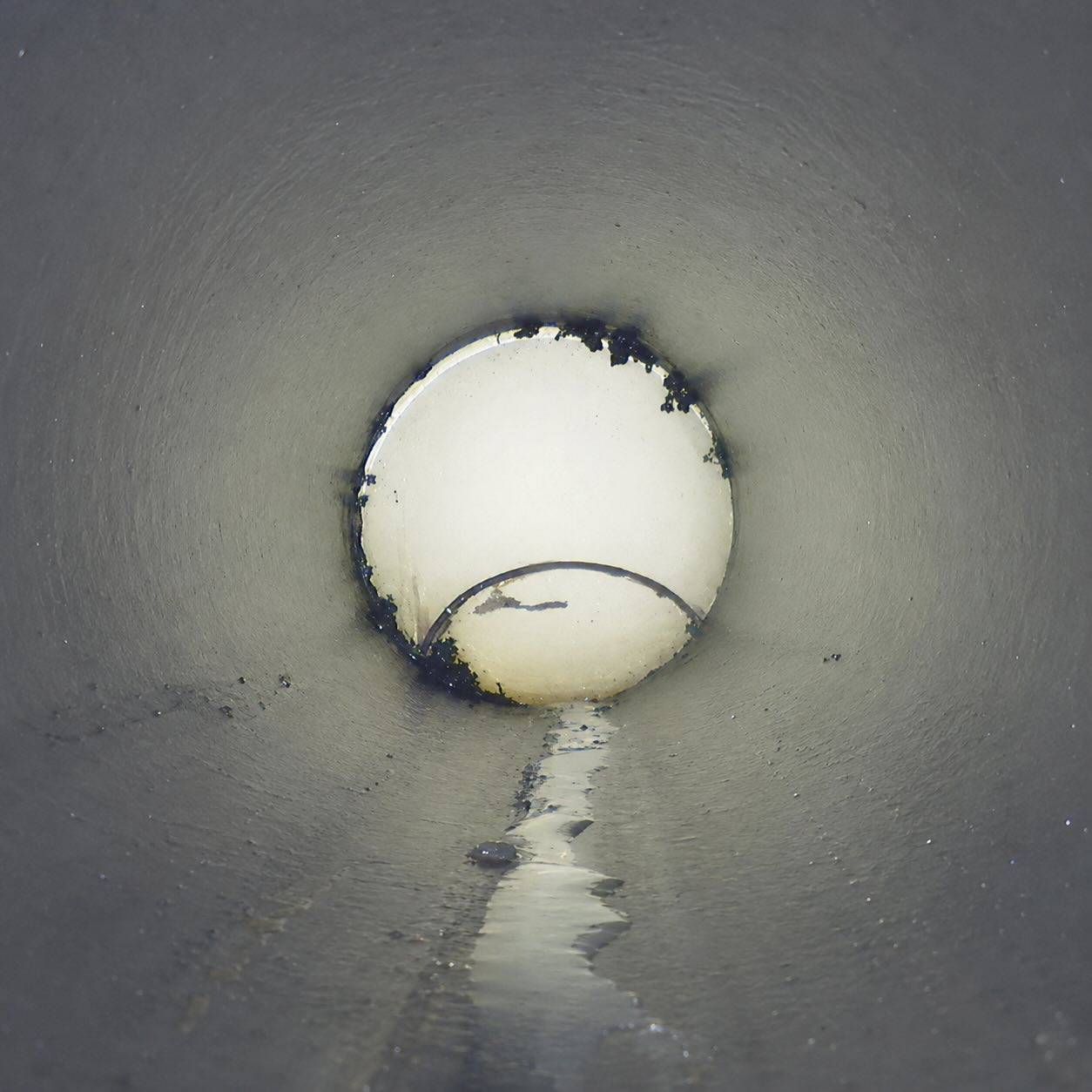
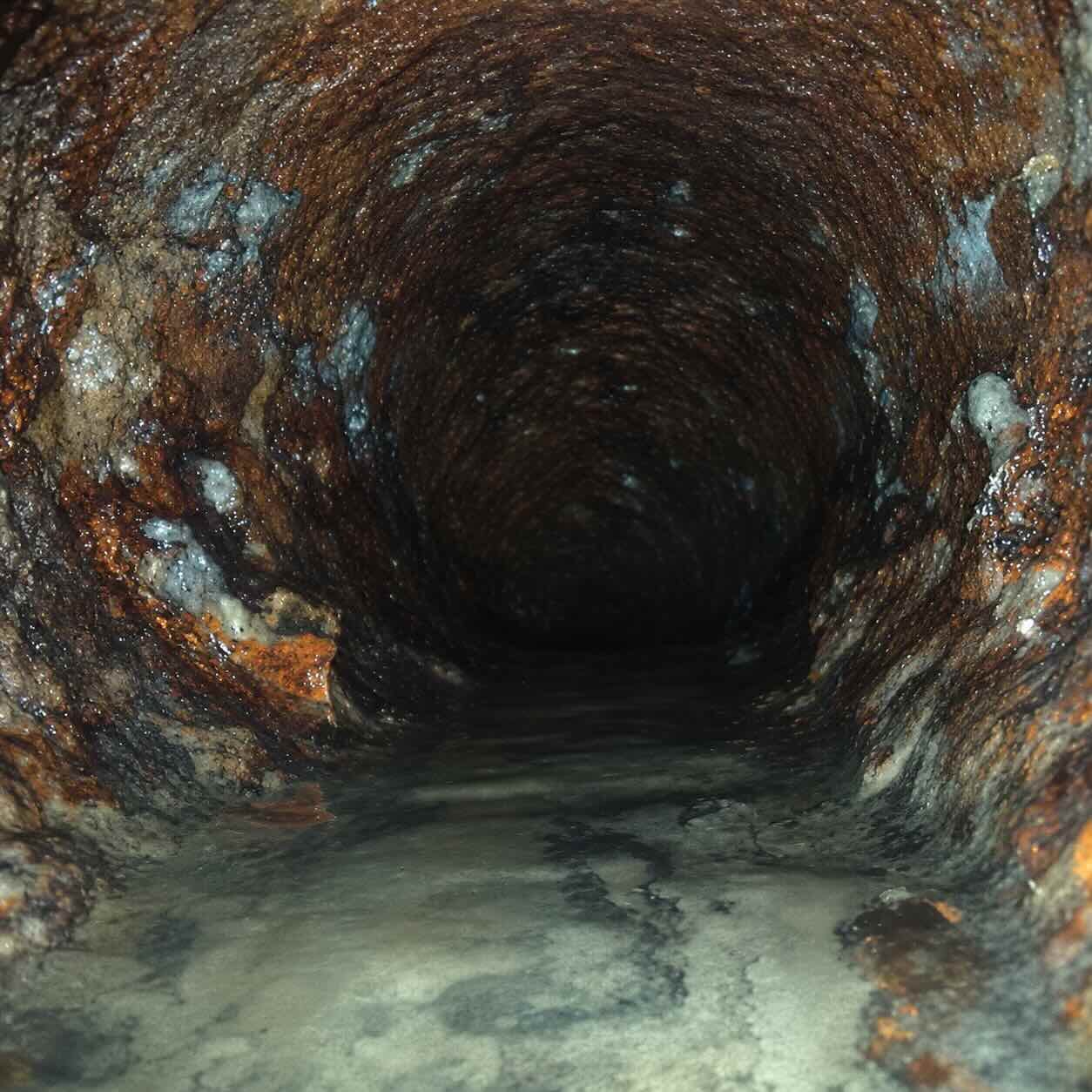
The top image shows the inside of a deteriorated sewer pipe before CIPP lining. Root intrusion, cracked joints, and debris buildup are visible. The bottom image shows the same pipe after lining. New structural surface, seamless, and fully sealed.
Drag the handle to compare. The yard above this pipe was never touched.
The liner was installed through existing cleanout access. The lawn, driveway, and landscaping were not disturbed.
Camera inspection, cleaning, liner installation, UV curing, final camera confirmation. Start to finish in a single visit.
The new pipe surface is seamless, root-resistant, and corrosion-free. No joints for roots to re-enter.
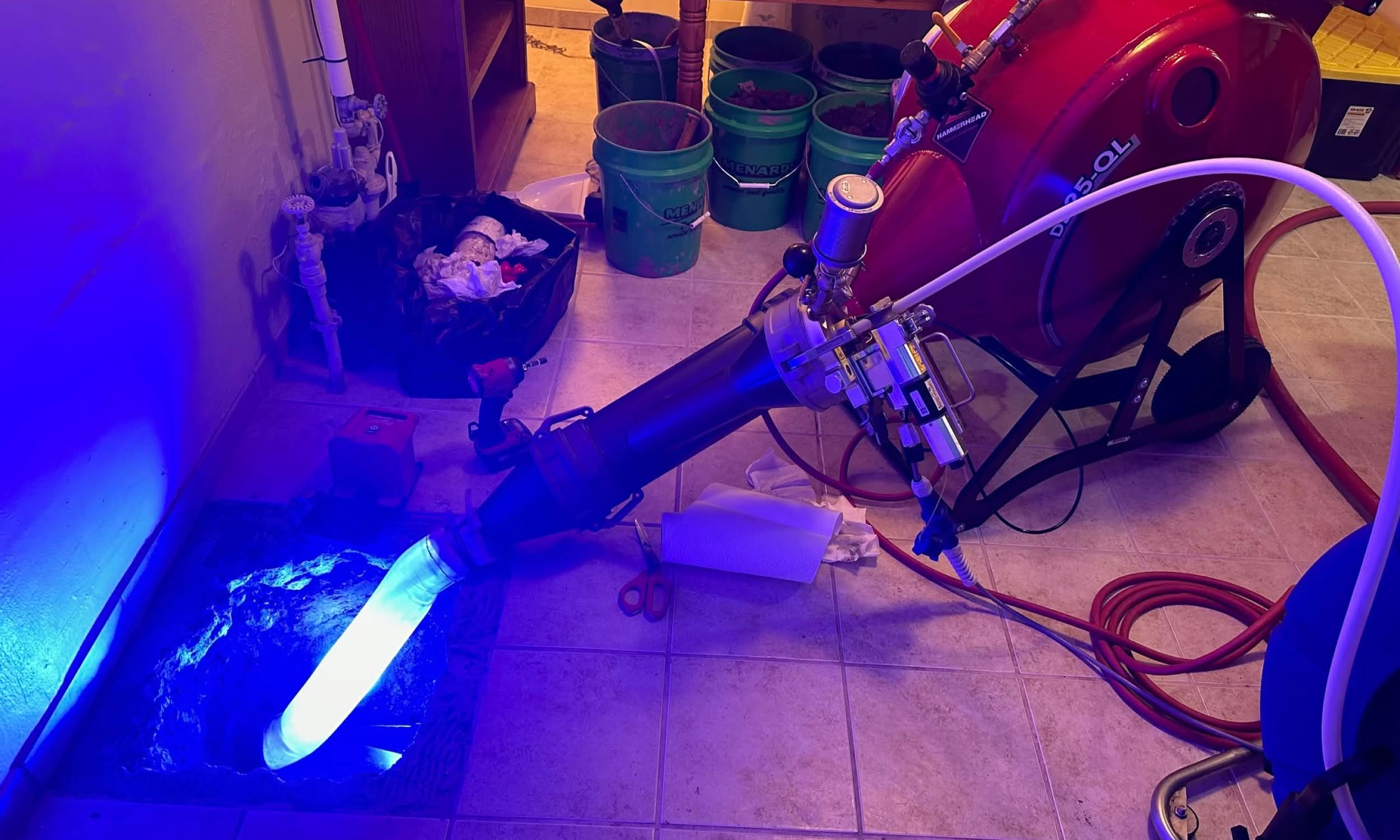
Most lining contractors cure with steam or hot water. We cure with ultraviolet light. It is the same principle as a dental filling: the material goes in soft, the light passes over it, and it hardens on command.
The pull-back speed on the light head is calculated for every job from the pipe diameter, the temperature, and the condition of the light head itself, down to whether a single bulb has burned out. A steam cure has no equivalent to that. You hold temperature for the recommended time and hope it took.
Hammerhead, start to finish. Built in Wisconsin outside Madison, so parts and service are a drive away rather than a shipment from overseas.
Blue Light UV. A light head is drawn back through the pipe on a controlled pull rate, with a camera on the head to confirm placement before the cure begins.
Fiberglass scrim in 4 inch and 6 inch, saturated with epoxy and pressed through by machine so the resin fully wets the material.
Picote high speed cleaner. Chains first to cut out root intrusion, then a sanding head to take the pipe wall back to clean material.
A steam or hot water cure needs ambient heat to work. In frozen Northland ground that gets hard enough that some lining contractors in this region simply stop for the winter. January through March, the service is not available from them.
A UV cure does not depend on ground temperature the same way. The light supplies the energy. That is the practical reason we can schedule a lining job in the middle of a Duluth winter.
Sewer lines do not wait for spring. Neither should the fix.
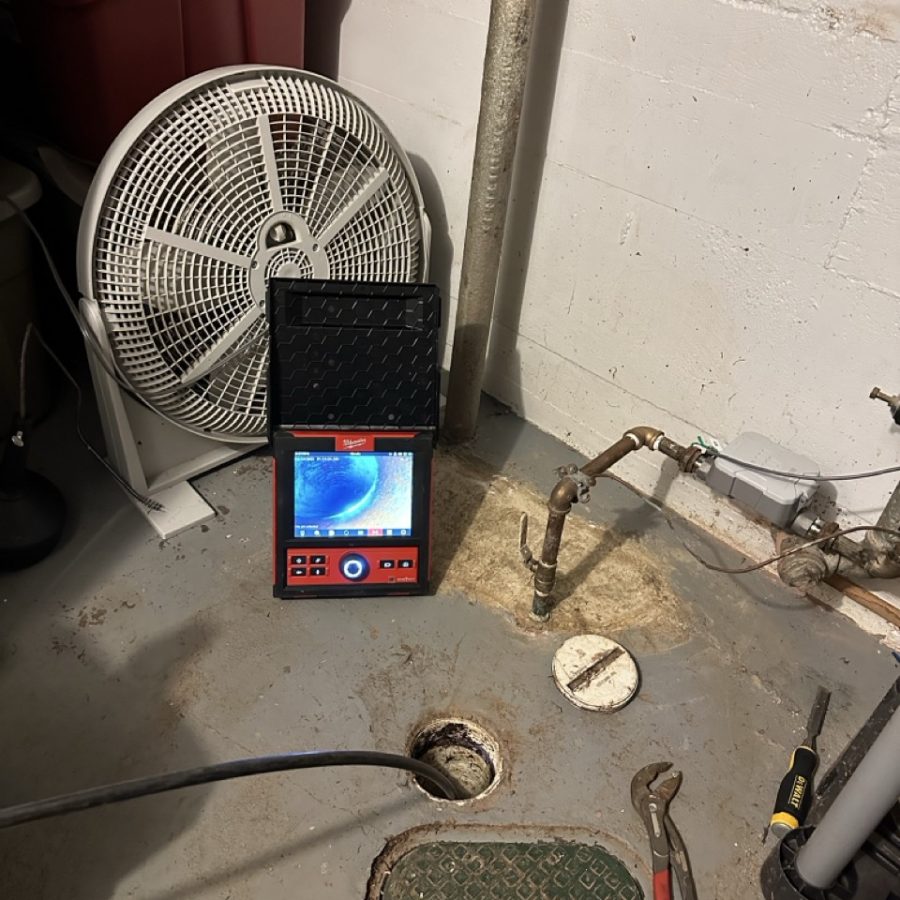
Camera in first. Liner in second. Camera again before we leave.
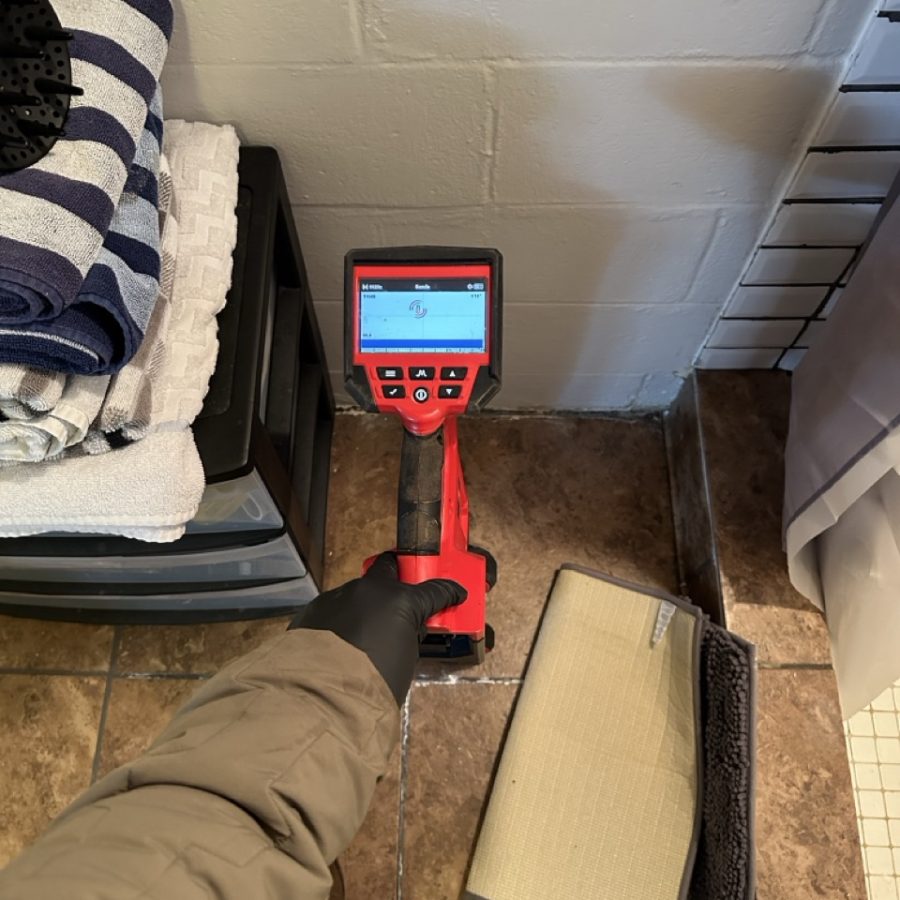
We run the camera before anything else. It tells us the length, the material, the condition, whether the line has lost its round shape, and whether it can be lined at all. You watch the screen with us. Free on service calls.
A Picote high speed cleaner goes in. Chains first to cut roots out at the wall, then a sanding head to take the pipe back to clean material. A liner bonded to roots and buildup is a liner that fails, so this is where a lot of the job happens.
The liner is cut to the length of the run and the epoxy is poured in, then pressed through the fiberglass by machine so the resin fully wets the material with no dry spots.
The liner is placed, then the Blue Light head is drawn back through it at a rate calculated for the diameter and conditions. The camera on the head confirms placement before the cure starts.
We run the camera one more time to confirm full coverage, a sound seal, and clear connections. You see the before and the after.
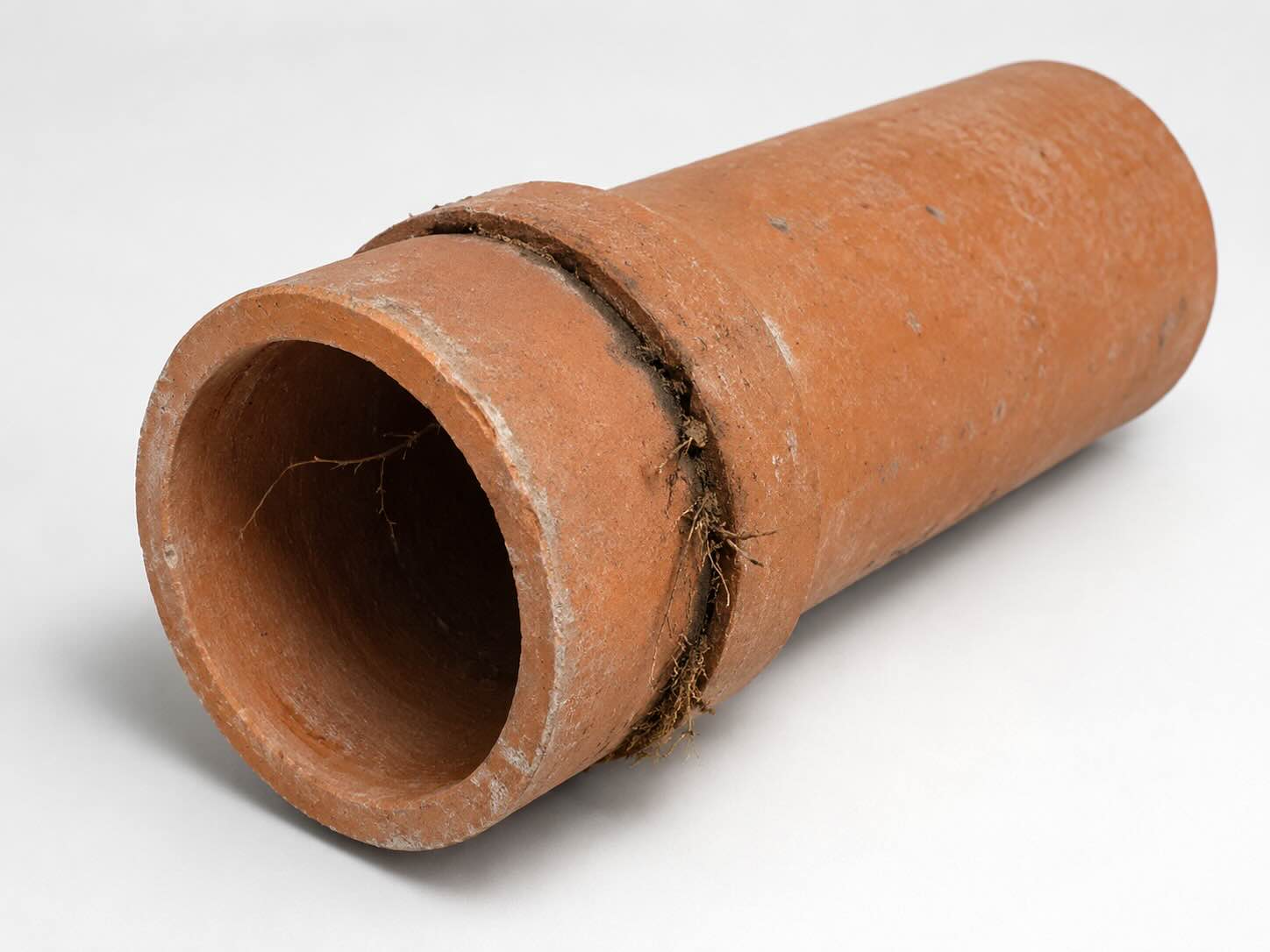
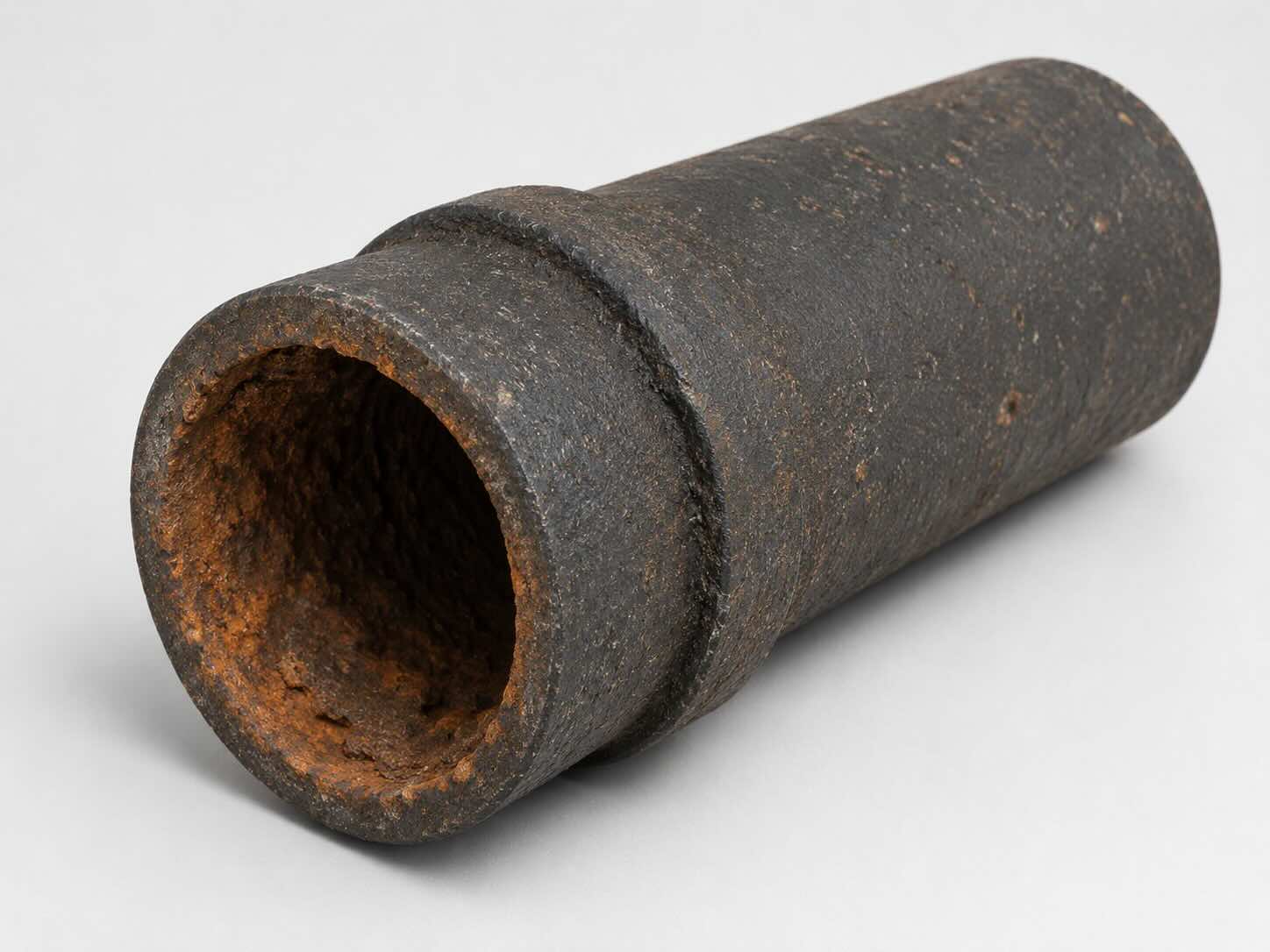
Clay, cast iron, concrete, and PVC all line well provided the pipe still holds its basic shape. One material does not.
The common setup around here is 4 inch cast iron leaving the foundation that transitions to 6 inch clay somewhere on the way to the main. That transition is a problem for a standard liner, which inflates to one fixed diameter and stops.
For most residential work we use a flex liner instead. It follows the shape of the pipe it is in, pressing into the actual contour of the line rather than holding one diameter. It handles a size change in a single continuous piece.
There is an honest limit. A narrow section stays narrow after lining, because the liner follows the pipe. If a previous contractor forced a smaller pipe into a larger one, we will tell you straight, and depending on what the camera shows we may recommend pipe bursting instead so you end up with one consistent full size line.
Not seeing yours? Call and ask. We will tell you if lining is wrong for your line.
Call 218-409-6356Most residential sewer lining projects run $5,000 to $15,000 or more depending on the length of the run, the pipe material, access, and how much cleaning the line needs before it can be lined. We do not quote lining over the phone. The camera inspection comes first, and it is free on service calls.
Yes. We cure with UV light rather than steam or hot water, so the cure does not depend on ground temperature the way a thermal cure does. Some lining contractors in this region stop lining from roughly January through March because their systems need ambient heat. We line year round.
Most residential lining jobs are completed in a single day. That is a direct result of the curing method. A steam or hot water cure on a cold day can require heat held in the line for 24 hours or more, and the sewer cannot be used during any of it.
Yes. Roots enter old pipe at joints and cracks. The finished liner is continuous from one end to the other with no joints to push through. We also cut the existing roots out with chains and sand the pipe wall before the liner goes in, so nothing is left behind it.
We back our lining work with a 10 year warranty. The liner material itself is tested to a 50 year service life.
In most cases yes, using a flex liner that follows the shape of the existing pipe rather than holding one fixed diameter. That covers the common Duluth setup of 4 inch cast iron transitioning to 6 inch clay. The honest limit is that a restriction stays a restriction after lining, so if the line has been narrowed we may recommend pipe bursting instead.
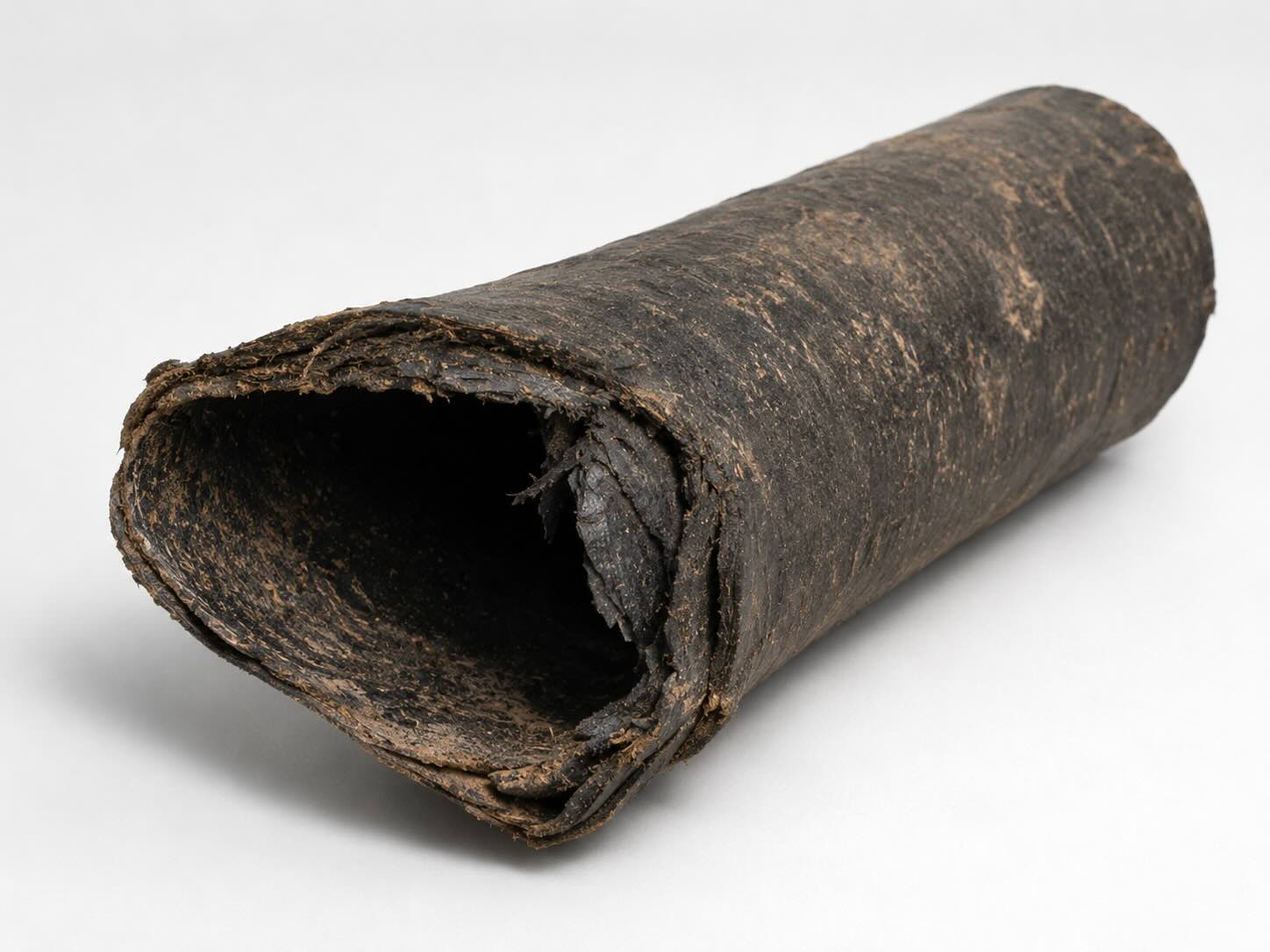
Clay tile, cast iron, concrete, and PVC all line well provided the pipe still holds its basic shape. Orangeburg is the exception, since it deforms as it fails and a liner will follow that bad shape. We have also lined PVC lines where the glued connections failed and digging would have meant tearing up parking lot or roadway.
When the pipe has fully collapsed, when there is a significant belly holding water because the line lost its grade, or when the connection at the city main requires excavation regardless. In those cases we move to pipe bursting or a targeted dig. The camera inspection is what tells us which situation you are in.
We install CIPP lining throughout Duluth, Superior, Hermantown, Proctor, Cloquet, Two Harbors, and Esko. Because we cure with UV light rather than steam, we are also able to line year round, which is not true of every lining contractor in this region.
The thing people say most: they couldn't tell we were ever there.

Based in Duluth at 4958 Rice Lake Rd. We service homes and businesses across Northern Minnesota and Wisconsin. Enter your address to see how quickly we can be there.
Enter your address. We will open Google Maps with directions from our shop right to your door.
Travel times are typical and vary with traffic and weather. For service outside this list, please call.
Camera inspection first. Honest options second. No pressure, no guessing.
Tell us what’s going on and we’ll respond the same day.