Trenchless sewer repair is a set of methods for fixing or replacing an underground sewer line without digging a trench along its full length. Instead of opening your yard from the house to the street, the work happens through one or two small access points. In most cases the lawn, driveway, and landscaping above the pipe are left intact.
If you have been told your sewer line needs work, that is the short version of what we do. Below is what each method involves, what it costs in the Duluth and Superior area, and how we decide which one your line needs.
Why Trenchless Exists
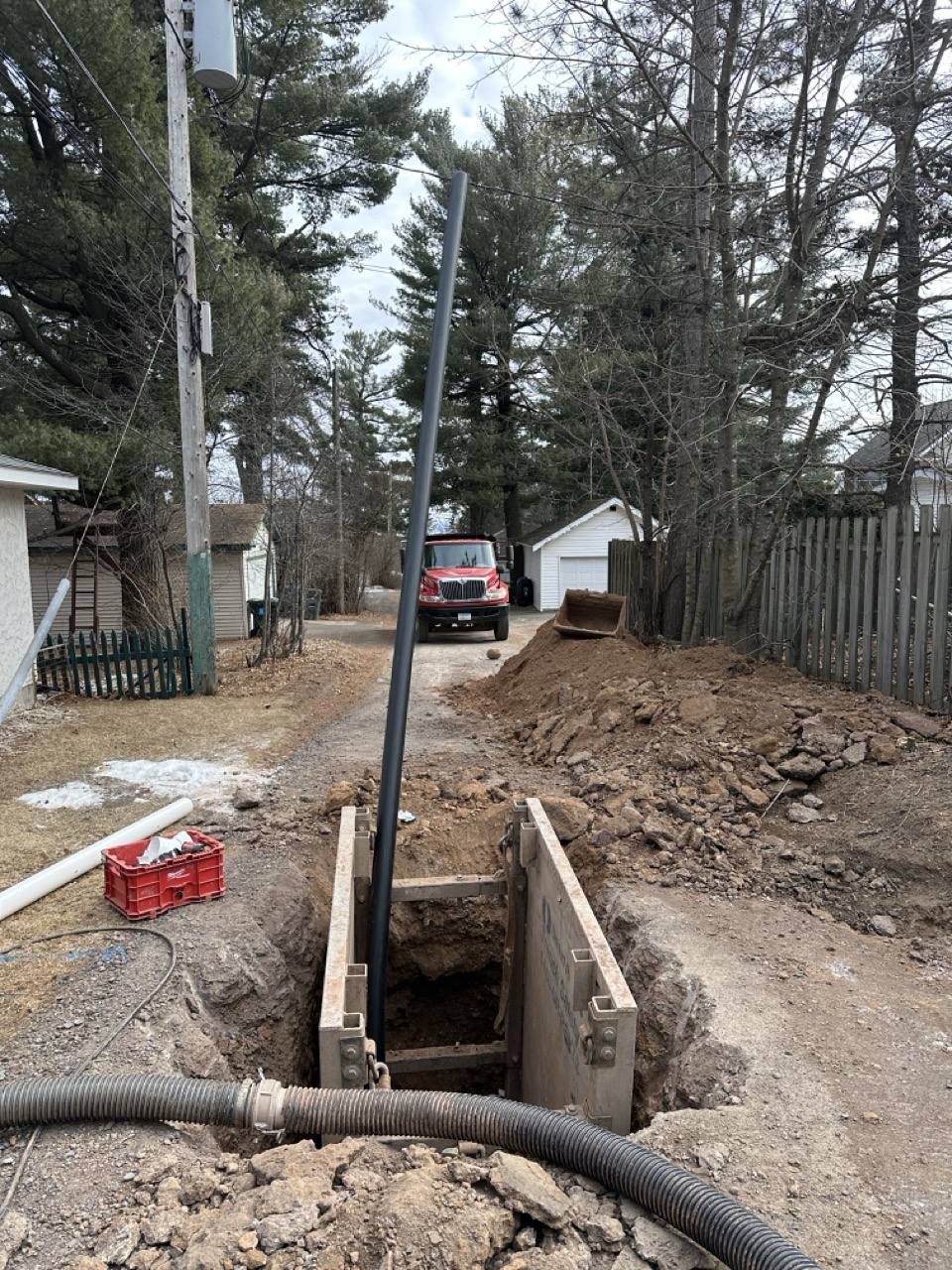
The traditional way to replace a sewer line is to dig it up. An excavator opens a trench from the foundation to the connection at the city main, the old pipe comes out, a new one goes in, and the trench gets backfilled.
That works. The problem is everything sitting on top of the pipe. Lawn, mature trees, a paver patio, a concrete driveway, a retaining wall. The pipe itself is rarely the expensive part of that job. Putting the property back together afterward is.
Trenchless methods were developed to solve that. The pipe still gets repaired or replaced, but the excavation shrinks from a full-length trench to a couple of access pits.
It Starts With a Camera, Every Time
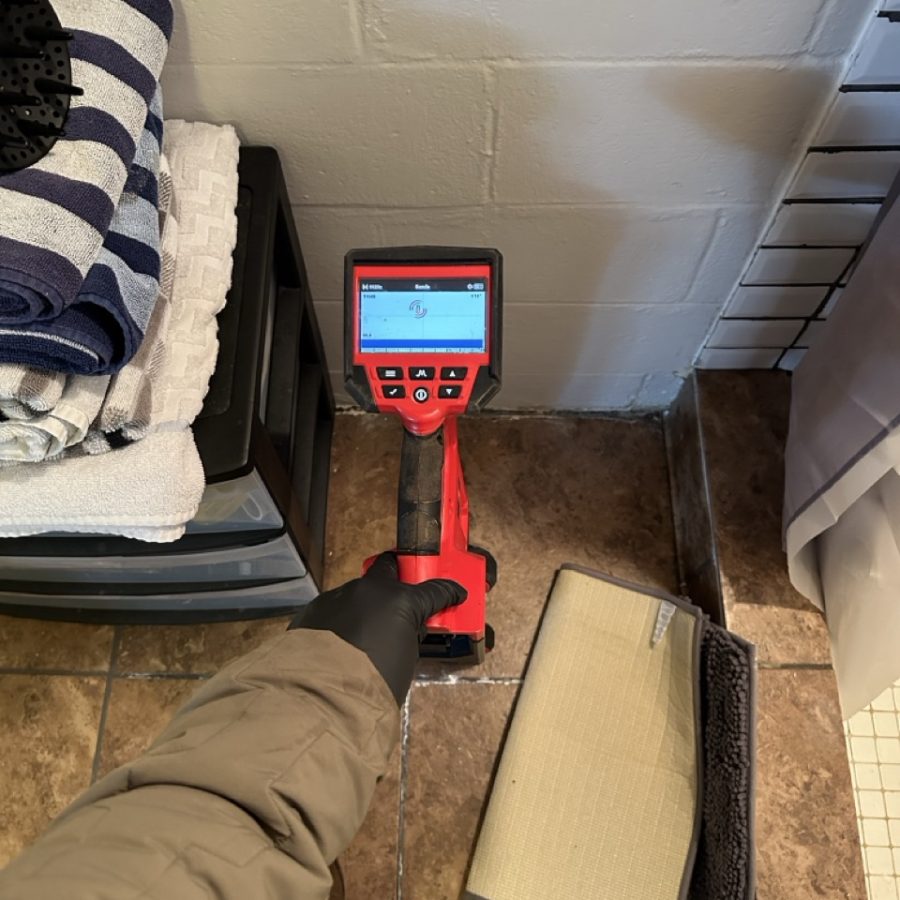
No honest answer about your sewer line is possible without looking inside it. We run an HD camera from the cleanout toward the city main and watch the screen with you.
The camera tells us four things that determine everything else:
- What the pipe is made of. Clay tile, cast iron, Orangeburg, concrete, or PVC. Each behaves differently and each rules certain methods in or out.
- How long the run is and where it sits.
- What is wrong. Root intrusion, cracks, offset joints, a belly holding water, corrosion, or a full collapse.
- Whether the pipe can hold a liner or needs replacing outright.
We include the camera inspection free. You see the same footage we do before anyone talks about price. That is the whole point. You should be making this decision with real information instead of taking a contractor’s word for it.
The Four Trenchless Methods
1. Point Repair, for one isolated defect
When a line is generally in good shape but has one or two specific problems, a point repair is usually the most economical fix.
We locate the exact defect with the camera and locating system, then install an epoxy repair patch using an inflatable packer. The patch is positioned over the damaged section and inflated against the pipe wall while the epoxy cures. The packer comes out and a sealed section stays behind.
Best for: a single cracked section, one bad joint, a localized break.
Not right when: the line has problems throughout. If we are looking at several patches, a full liner is the better long-term investment.
Cost: starting around $3,500.
More detail on the point repair process here.
2. CIPP Lining, a new pipe inside the old one
Cured in place pipe, or CIPP, is used when a line has multiple defects but the pipe still holds its shape well enough to support a liner.
The line gets a detailed camera inspection and then a thorough cleaning. Specialized equipment removes roots, buildup, burrs, and debris, because a liner will not bond correctly to a dirty pipe. This step matters more than most homeowners realize and it is where corners get cut in this industry.
Once the pipe is clean, a custom liner is measured, cut, and saturated with epoxy resin. It is installed through an inversion process that presses it tightly against the existing pipe walls, and a calibration tube makes sure it conforms to the exact shape and diameter of the host pipe. When it cures, you have a continuous, jointless pipe inside the old one.
That continuity is why lining stops root intrusion for good. Roots enter at joints and cracks. A finished liner has neither.
Best for: clay tile and cast iron with cracks, root intrusion, or joint separation, where the pipe still holds its round shape.
Not right when: the pipe has collapsed, has a significant belly, or has deformed out of round.
Cost: $5,000 to $15,000 and up, depending on length, material, and access.
Full detail on sewer pipe lining.
3. Pipe Bursting, full replacement without the trench
When a line is collapsed, severely deteriorated, or otherwise unsuitable for lining, pipe bursting replaces it entirely without opening a full trench.
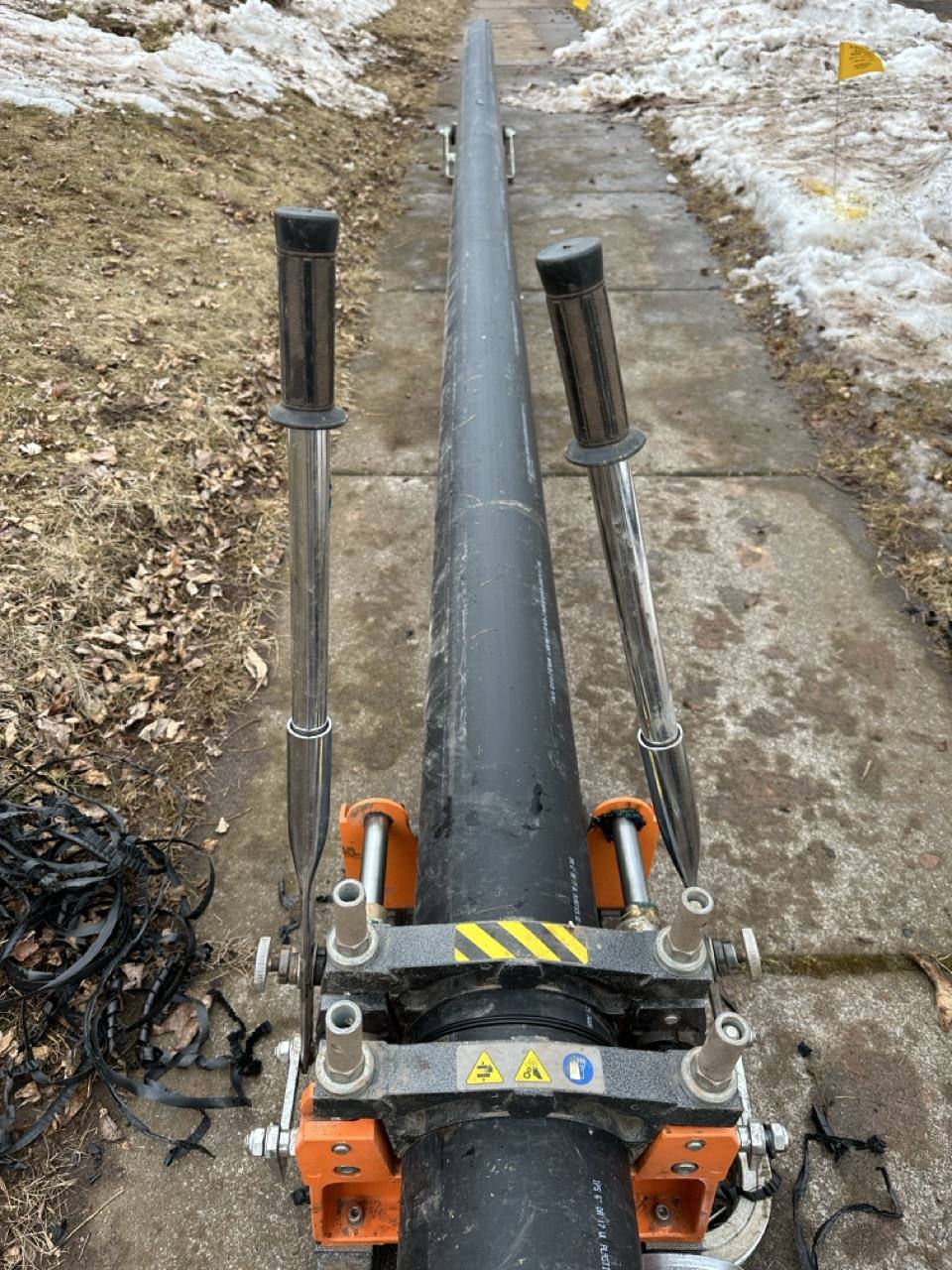
We start by locating the sewer connection at the city main and excavating an access point there. Inside the home, we create access where the sewer exits the foundation. A hydraulic bursting unit is set up and a cable is run through the existing pipe.
A bursting head is attached to that cable, along with a new HDPE sewer pipe that has been fusion welded into one continuous length. As the unit pulls the assembly through, the bursting head fractures the old pipe outward into the surrounding soil while the new HDPE line is drawn into the space it occupied.
The new pipe is connected at the house and at the city main, the area is backfilled and restored, a new cleanout is installed, and we run a final camera pass to confirm the work before we leave.
The result is a brand new, jointless pipe along the original path, with two access pits instead of a trench across the yard.
Best for: collapsed lines, advanced deterioration, deformed Orangeburg, and any situation where you want a full size new pipe rather than a rehabilitated old one.
Also right when: the existing line changes diameter partway. Bursting gives you one consistent pipe where lining would preserve the restriction.
Cost: most residential projects run $12,000 to $20,000 and up.
More on trenchless pipe bursting.
4. Directional Boring, for water service lines
Water lines get their own method. Because restoration often costs more than the utility work itself, our preferred approach is directional boring.
We excavate a small access pit near the curb stop, then use a boring system to install a new HDPE water service beneath lawns, sidewalks, driveways, and landscaping. The new line is connected at the curb stop and at the meter inside the home, then the work area is restored.
Cost: water line repairs start around $5,000. Full replacements typically run $10,000 to $15,000 and up.
Detail on water line repair and replacement.
How We Choose
The camera decides, not a preference. Roughly how it maps out:
| What the camera shows | Method | Typical cost |
|---|---|---|
| One isolated crack or bad joint | Point repair | $3,500+ |
| Roots and cracks throughout, pipe still round | CIPP lining | $5,000 to $15,000+ |
| Collapse, deformation, or severe deterioration | Pipe bursting | $12,000 to $20,000+ |
| Belly or sag holding water | Bursting or targeted dig | Varies by depth |
| Failing water service | Directional boring | $10,000 to $15,000+ |
What Trenchless Cannot Do
Worth being straight about, because plenty of contractors are not.
Trenchless is not zero excavation. It is reduced excavation. Lining needs access at both ends. Bursting needs a pit at the main and access at the foundation. Anyone promising no digging at all is overselling.
Some lines are not candidates. A pipe that has fully collapsed cannot be lined. A line with a significant belly has lost its grade, and a liner follows whatever shape it finds, so the belly stays. Those situations need bursting or a targeted dig.
The connection at the main sometimes requires excavation regardless. Depending on how your line ties in, that section may need to be opened no matter which method is used above it.
Why This Matters More in the Twin Ports
Two local conditions push the math further toward trenchless here than in most markets.
Bedrock. Duluth sits on rock that is near or at the surface across much of the city. Digging a full-length trench can mean breaking rock, which is slow, loud, and expensive. Two access pits are a very different proposition than sixty feet of rock trenching.
Older housing stock and steep lots. Much of what we work on is clay tile or cast iron in neighborhoods built before 1970, often on a hillside where a trench means dealing with grade, retaining walls, and mature landscaping.
We work throughout Duluth, Superior, Hermantown, Proctor, Cloquet, Two Harbors, and Esko.
Common Questions
How long does trenchless sewer repair take?
Most residential lining jobs are completed in a single day. Pipe bursting is typically one to two days depending on length, depth, and access. You can use water normally right up until the crew installs, and in most cases you are back to normal use the same day.
Is trenchless cheaper than digging?
Usually, once restoration is counted. The pipe work alone can be comparable, but a full trench means putting back the lawn, driveway, patio, or landscaping on top of it. That restoration is frequently the larger number, and trenchless mostly avoids it.
How long does a trenchless repair last?
A CIPP liner has a design life of roughly 50 years. HDPE pipe installed by bursting is a new pipe with a comparable or longer life. Neither is a patch.
Can any sewer line be repaired trenchlessly?
No. A fully collapsed line, a pipe with a significant belly, or one too deteriorated to hold a liner will need bursting or excavation. The camera inspection is what tells us which situation you are in, which is why we will not quote before running one.
Do you serve Superior and Hermantown?
Yes. We work throughout Duluth, Superior, Hermantown, Proctor, Cloquet, Two Harbors, and Esko, and we are licensed and bonded in both Minnesota and Wisconsin.
Getting a Real Answer for Your Line
Everything above is a range or a rule of thumb. Your line has one specific answer, and it is on the camera footage.
We include the inspection free. You watch the screen, you see what we see, and then we talk about options and what each one costs. No quote before the camera, and no pressure after it.
Contact us or call 218-409-6356.