If a drain is backing up, a basement floor drain is surging, or a camera just found something you did not want to see, the first question is almost always the same: what is this going to cost?
The honest answer is that it depends entirely on which method your pipe can accept. A line with one cracked joint and a line that has collapsed under a hundred year old clay lateral are different jobs with different prices. This guide walks through what each method costs in Minnesota, what moves the number up or down, and how to get a real figure for your own property without paying anyone to find out.
Trenchless Sewer Repair Costs in Minnesota at a Glance
These are the ranges Contour quotes for work in Duluth and across northern Minnesota. They are project totals, not per-foot teasers.
| Service | Typical Cost | Best For |
|---|---|---|
| Sewer camera inspection | Free | Every job. Always the first step |
| Trenchless point repair | Starting at $3,500+ | One isolated crack or failed joint |
| Sewer pipe lining (CIPP) | $5,000 to $15,000+ | Multiple defects in a pipe that still holds its shape |
| Pipe bursting, full replacement | $12,000 to $20,000+ | Collapsed, crushed, or badly deformed pipe |
| Water line repair | $5,000+ | A failure at one point in the service line |
| Water line replacement | $10,000 to $15,000+ | Failed or undersized service line |
Northern Minnesota pricing, current as of October 2026. Your exact figure depends on length, depth, pipe material, and access, all confirmed by the free camera inspection.
Why We Quote Projects, Not Price Per Foot
Plenty of cost guides lead with a per-foot number. We do not, because on a Duluth lateral it is misleading. Two lines on the same street can run the same distance and price differently once you account for how deep they sit, whether the run is through clay or cast iron, whether a house trap is in the way, and what has to be restored at the surface afterward.
A per-foot figure also tempts a contractor to quote low and bill the rest later. We would rather give you a project number after we have seen inside the pipe.
What Each Method Costs, and When It Applies
Sewer Camera Inspection: Free
Every sewer project at Contour starts with a camera. We locate the cleanout and run a high definition camera from the house to the city main, documenting pipe size, material, length, and condition. We are looking for root intrusion, separated joints, sags, debris, house traps, and collapsed sections.
The inspection is free. The locate is free. The written report is free. There is no charge and no obligation, including for a home purchase, a point of sale, or an insurance claim. You keep the footage, and you are welcome to take it to another contractor for a second quote. We would rather you make the decision with good information than feel committed because you paid us to look.
If you want the full detail on what the camera finds and why it matters, see our guide to sewer camera inspection cost in Duluth and what each finding means.
Trenchless Point Repair: Starting at $3,500+
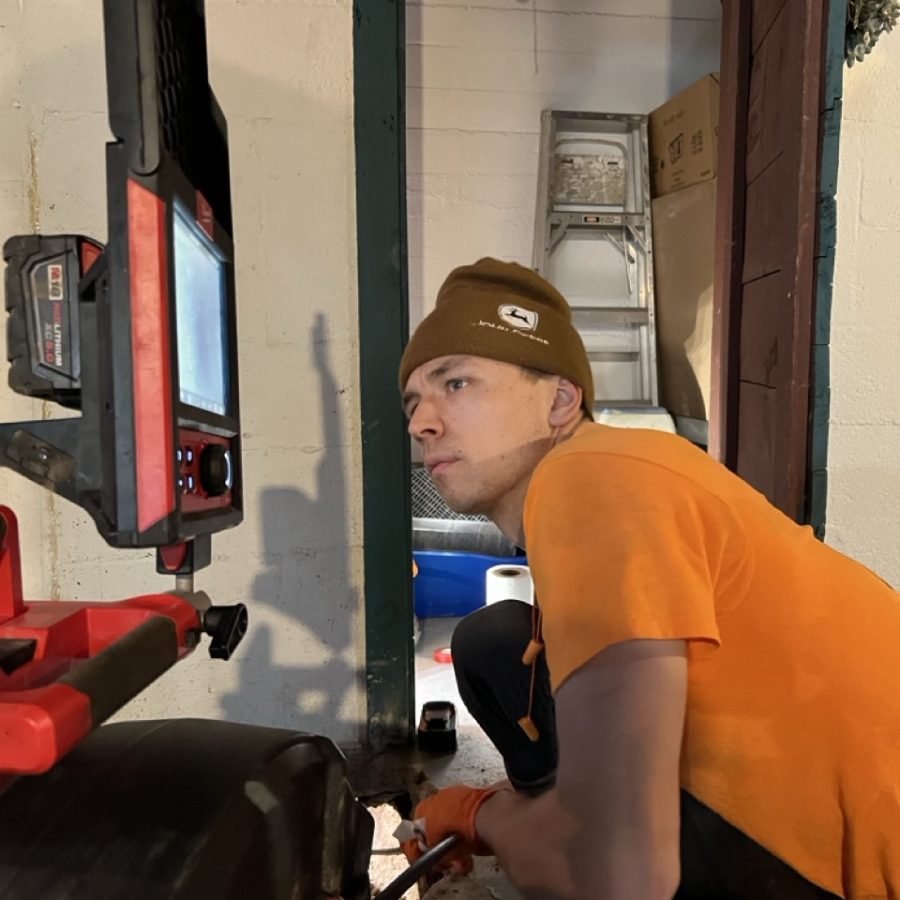
When a line is generally sound but has one or two isolated defects, a point repair is usually the most sensible path. We locate the exact defect, then install an epoxy repair patch with an inflatable packer positioned over the damaged section. The epoxy cures against the pipe wall and seals the defect without opening the ground.
Point repair is the right call when the damage is genuinely isolated. If the camera shows defects spread along the whole lateral, patching three or four spots costs more than lining the line once and leaves the untouched sections to fail later. More on this on our point repair page.
Sewer Pipe Lining, CIPP: $5,000 to $15,000+
Lining is the method most Minnesota homeowners end up using. It applies when a pipe has multiple defects but still holds enough of its original shape to host a liner.
The work starts with cleaning. We use a Picote high speed cleaner, running chains first to cut out root mass, then a sanding disc to take the pipe wall back to a surface the resin can grip. Then a liner is measured, cut, and saturated with epoxy, pulled into position, and inflated against the pipe wall. Once a camera confirms the liner is sitting correctly, it is cured in place.
The result is a jointless pipe inside the old pipe, with no open seams for roots to find. The liner carries a 10 year workmanship warranty from us and the product itself is tested to a 50 year life. Most residential lining jobs are done in a single day.
Where a job lands in the range comes down mostly to the length of the run, the pipe diameter, and how hard the access is. Older Duluth neighborhoods often have longer laterals than newer construction, which pushes toward the upper end.
Pipe Bursting, Full Replacement: $12,000 to $20,000+
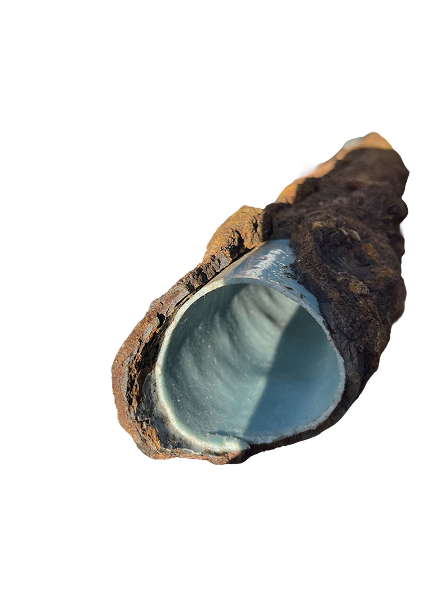
When a line is collapsed, crushed, or so deformed that a liner cannot sit against the wall, bursting is the answer. A hydraulic head is pulled through the old pipe, fracturing it outward into the surrounding soil while pulling a new HDPE pipe in behind it. It needs access at both ends, normally a pit near the city connection and an access point at the house.
Bursting replaces the pipe rather than rehabilitating it, and it can upsize the diameter at the same time. It costs more than lining because of the excavation at each end and the restoration that follows. See pipe bursting for the full process.
Water Line Repair and Replacement: $5,000+ and $10,000 to $15,000+
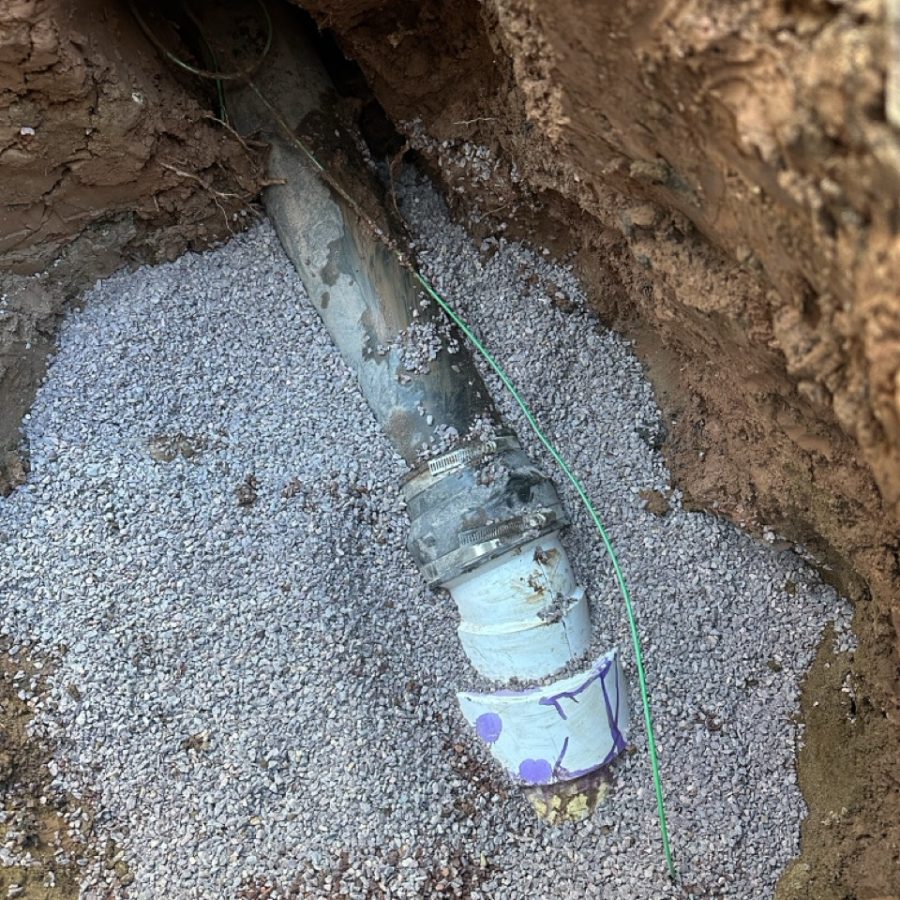
Water service work starts with a site visit. The usual signs are unexplained usage, a notice from the city about consumption, a wet spot near the curb stop, or water showing up in drain tile. For replacement we prefer directional boring: a small pit near the curb stop, a new HDPE service pulled underneath the lawn, walk, and driveway, then connections at the curb stop and the meter. Restoration is often the larger half of an open cut water line job, which is exactly what boring avoids. See water line repair and replacement.
Seven Things That Move Your Price
1. Length of the run. The biggest single factor. More length means more liner, more resin, more cure time, and a longer pull for a bursting head.
2. Pipe diameter. Residential laterals here are usually 4 inch or 6 inch. Larger diameters need more material and heavier equipment.
3. Depth. Sewer lines in this climate sit well below frost. Depth matters most for bursting, where the entry and exit pits have to be dug to the pipe. For a lining job run through an existing cleanout, depth matters less. Our guide on how deep sewer lines are buried in Duluth covers this in detail.
4. Pipe material and condition. Clay needs careful cleaning before lining. Cast iron with heavy scale needs mechanical descaling first. Orangeburg, the bituminous fiber pipe used in homes built roughly 1945 to 1972, deforms from round to oval as it ages and usually cannot be lined at all, which pushes the job to bursting. See clay, cast iron and Orangeburg compared.
5. Access. A usable cleanout keeps a lining job simple. No cleanout, a finished basement slab in the way, or a line running under a driveway all add labor.
6. Cleaning and prep. Heavy root mass, grease, or scale means more passes before a liner can go in. We quote cleaning as part of the job rather than discovering it later.
7. A house trap in the line. Older Duluth homes often have one. It restricts access and frequently has to come out before the line can be scoped or lined. See house trap removal.
Trenchless Against Open Cut: The Comparison That Matters
Trenchless work can cost more per foot than simply digging the pipe up. That is true, and it is also not the whole number.
An open cut replacement means trenching the full length of the lateral, pulling the old pipe, laying new pipe, backfilling in lifts, and then restoring every surface the trench crossed. In Duluth that frequently means a concrete driveway section, a city sidewalk panel, mature landscaping, and sometimes a tree. None of that shows up in a quote for the pipe alone, and all of it lands on your bill.
When you compare quotes, insist that surface restoration is itemized on both. Our breakdown of pipe lining against digging up your yard goes through this decision in full.
What Makes a Minnesota Job Different
Old pipe stock. Much of residential Duluth went in between 1900 and 1960 on clay tile. Clay joints separate, roots find the gaps, and the pipe needs thorough cleaning before any liner will bond.
Hillside terrain. Duluth laterals run at grades most of the country never deals with, and at depths that make access pits more work than they would be on a flat lot.
Long laterals. Deep lots in the older neighborhoods mean runs of 80 to 120 feet or more to the main. Longer line, larger job.
Mature tree canopy. Root intrusion is the single most common thing our camera finds here. See tree roots in sewer lines.
Freeze and thaw. Ground that moves every winter works joints apart over decades. It is a slow failure mode, and it is why a line that was fine ten years ago is not fine now.
We Line Year Round, Which Matters Here
This is worth understanding before you schedule anything. Most lining outfits in this country, by our estimate around three quarters of them, still cure liners with steam or hot water using a two part epoxy. That method needs ambient heat. On a cold day it can need hot water or steam held in the line for 24 hours or more, and you cannot use your sewer while that happens. On a hot day the resin can cure before the liner has fully expanded.
Contour runs a Hammerhead system with a Blue Light UV cure. The light head travels the line on a rod with a camera on board, confirming the liner is seated before anything cures, and the pull back speed is calculated from pipe temperature, diameter, and the condition of the bulbs themselves. It is a controlled process with fewer variables.
The practical consequence: the nearest competitor running the older system does not line from January through March. We do. If your line fails in February, that is the difference between a repair and a winter of managing a failing sewer. More on the method in how UV cured epoxy resin works and the technical properties of a cured liner.
When Trenchless Is Not the Answer
We would rather tell you this up front than halfway through. A camera inspection sometimes shows conditions that rule trenchless out:
- A fully collapsed section with nothing left to work through. Both lining and bursting need some remnant pipe. A total void usually means digging at that spot.
- Joints offset so far the liner cannot bridge them, or a bursting head cannot pass.
- Pipe running under a foundation without clear access at both ends of the section being treated.
- No cleanout and no way to get equipment in, which can mean a small excavation before trenchless work can start.
Where trenchless does not fit the whole line, a hybrid often does: dig the one bad spot, line the rest.
Grants and Cost Sharing Worth Asking About
Duluth has run an inflow and infiltration program since 2012, and Superior runs one as well. Depending on the work and the property, there may be assistance available toward correcting a private lateral, including house trap removal. Contour is on the approved contractor list. It is worth a conversation before you assume the whole number is yours. See our financial assistance page.
Trenchless Sewer Repair Across Minnesota
We work throughout northern Minnesota. Pricing follows the same ranges above, with travel and local conditions accounted for in the quote:
- Trenchless sewer repair in Duluth, MN
- Trenchless sewer repair in Hermantown, MN
- Trenchless sewer repair in Proctor, MN
- Trenchless sewer repair in Cloquet, MN
- Trenchless sewer repair in Two Harbors, MN
- Trenchless sewer repair in Hibbing, MN
Across the bridge in Wisconsin? See what trenchless sewer repair costs in northern Wisconsin.
How to Get a Real Number for Your Property
Start with the camera. It is free, and nothing honest can be quoted without it. Any firm price given over the phone from a description is a guess that will change.
Get the quote itemized. Cleaning and prep, the repair method and scope, any excavation and the restoration that follows, permits, and warranty terms should all appear as separate lines. Compare like for like.
Ask what happens if the camera finds something worse. A contractor who has scoped the line should be able to tell you the realistic worst case before you commit.
Call 218-409-6356 or request a free camera inspection and Brian will follow up.
Frequently Asked Questions
How much does CIPP pipe lining cost in Minnesota?
CIPP pipe lining in Minnesota runs $5,000 to $15,000+ for a typical residential lateral. Where your job falls depends on the length of the run, the pipe diameter, and access. The free camera inspection is what narrows it to a firm number.
Is the sewer camera inspection really free?
Yes. The inspection, the locate, and the written report are all free, with no obligation, including for a home purchase or an insurance claim. You keep the footage and you are welcome to take it to another contractor for a second quote.
How much does it cost to replace a sewer line in Minnesota?
Full trenchless replacement by pipe bursting runs $12,000 to $20,000+. That reflects line length, depth, access at both ends, and the surface restoration required at your specific property.
Is trenchless cheaper than digging?
Usually, once the full job is counted. Open cut can look cheaper on the pipe alone, then adds driveway, sidewalk, and landscaping restoration that trenchless avoids. Ask for restoration to be itemized on every quote you compare.
How long does a CIPP liner last?
The liner product is tested to a 50 year life and we warranty our workmanship for 10 years. The cured liner has no joints, which is what removes the entry point roots use.
Can you line a pipe in the winter in Minnesota?
Yes. Our Blue Light UV cure does not rely on ambient heat, so we line year round. Systems that cure with steam or hot water struggle in the cold, which is why the nearest competitor using that method stops lining from January through March.
Can cast iron pipe be lined?
Often, yes. Cast iron that is cracked or taking roots but still round is a good candidate. Heavy internal scale has to be cut back first, and cast iron that has lost its structure needs bursting instead. The camera settles it.
Does homeowner insurance cover sewer line repair?
Standard policies usually do not, though many insurers sell a service line endorsement that does. Check your policy or call your agent. If you are covered, we can help with the documentation your insurer asks for.
How long does the work take?
Most lining jobs are a single day. Bursting is normally one to two days depending on length and access. Water line replacement is generally a day.
What if roots are blocking the camera?
We clean the line first, then finish the inspection. If a house trap is limiting access, we will show you what it would take to remove it and scope from a better point.